22 Creative Ways to Use Dog Supplies and Gadgets
Dog supplies and gadgets are the everyday tools of dog life, from bowls and leashes to trackers, cameras, and puzzle toys, and 22 Creative Ways to Use Dog Supplies and Gadgets can turn that drawer of half-used gear into a system that actually makes your days easier. These 22 ideas cover feeding, training, grooming, travel, tech, comfort, play, and safety, so whether you live with a busy puppy or a slow senior, there is a use here. Picture a kitchen where breakfast doubles as a brain game, a walk where one pouch and one long leash handle recall and sniffing, and an evening where your dog settles on a cool bed while you finally sit down too. That is the payoff: the gear you already own, used with a little more imagination, giving you calmer days and a happier dog. Here are 22 ideas worth saving — and stealing.
Why 22 Creative Ways to Use Dog Supplies and Gadgets Work So Well
Creative use of dog gear began with a simple realization: most supplies were designed for one job but work well for three. Owners noticed that a slow feeder also calmed a frantic eater, that a lick mat also made bath time bearable, and that a cheap clicker taught manners faster than a long lecture.
The key materials are ordinary and easy to find. Silicone, stainless steel, and washable fabric show up again and again, because they survive chewing, washing, and daily use. Puzzle toys, feeders, and mats rely on food motivation, while trackers, cameras, and speakers rely on small electronics that have become cheap and reliable.
Dog gadgets are trending because dogs now share every part of family life, from commutes to video calls to weekend hikes. Owners want gear that keeps dogs busy while they work, safe while they roam, and calm while they rest.
Beginners should respect a few limits. No gadget replaces attention, training, or a vet visit, and every electronic item needs charging, cleaning, and a backup plan when the battery dies. Always introduce new gear slowly, watch for chewing on cords or small parts, and keep food-based tools within daily portion limits.
| Element | Everyday Use | Creative Upgrade |
|---|---|---|
| Philosophy | One tool, one job, used when needed | One tool, several jobs, built into the daily routine |
| Materials | Basic plastic bowl, standard leash, plain bed | Silicone mats, steel feeders, washable covers, smart trackers |
| Color palette | Mismatched gear in random colors | Coordinated neutrals and brights that suit your home |
1. Slow Feeder as a Rainy-Day Puzzle: Breakfast That Burns Energy
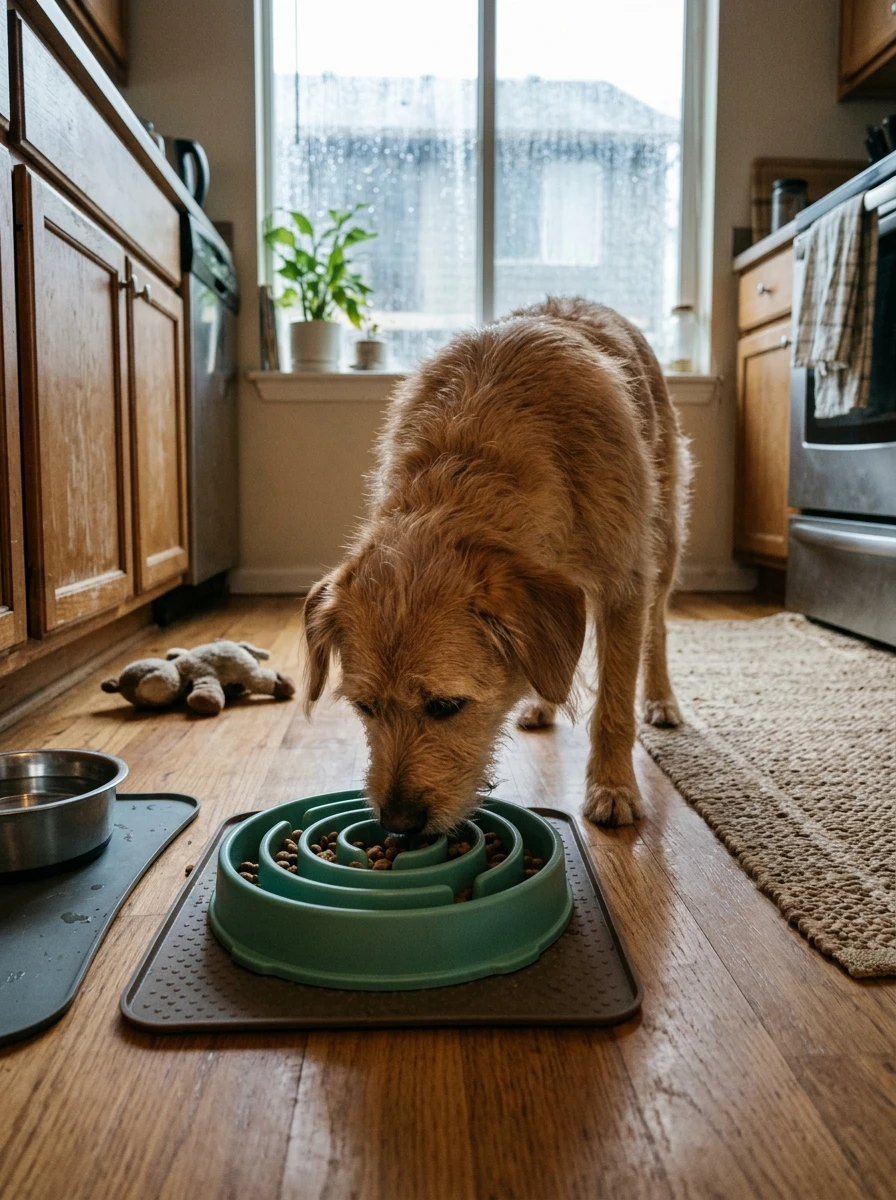
Vibe: Slow, focused, and happily busy, breakfast that works like a puzzle.
Why it works: Fast eaters gulp food in seconds, but a maze feeder forces small bites and nose work. That mental effort tires a dog nearly as well as a walk.
How to get it: Pick a maze bowl sized for your dog’s muzzle and fill it with half the kibble plus a few treats hidden in the channels. Start with a shallow maze and move to deeper patterns as your dog learns.
💡 Quick Win: Freeze one prepared bowl the night before so rainy mornings need zero prep.
Shop The Look
Product Search
- Slow feeder bowl
- Slow feeder maze insert
- Stainless steel slow feeder
- Ceramic slow feeder bowl
- Portion measuring scoop
Also view: 14 sweet ways to enjoy couches for dog owners durable
2. Lick Mat for Calmer Bath Time: A Distraction That Sticks
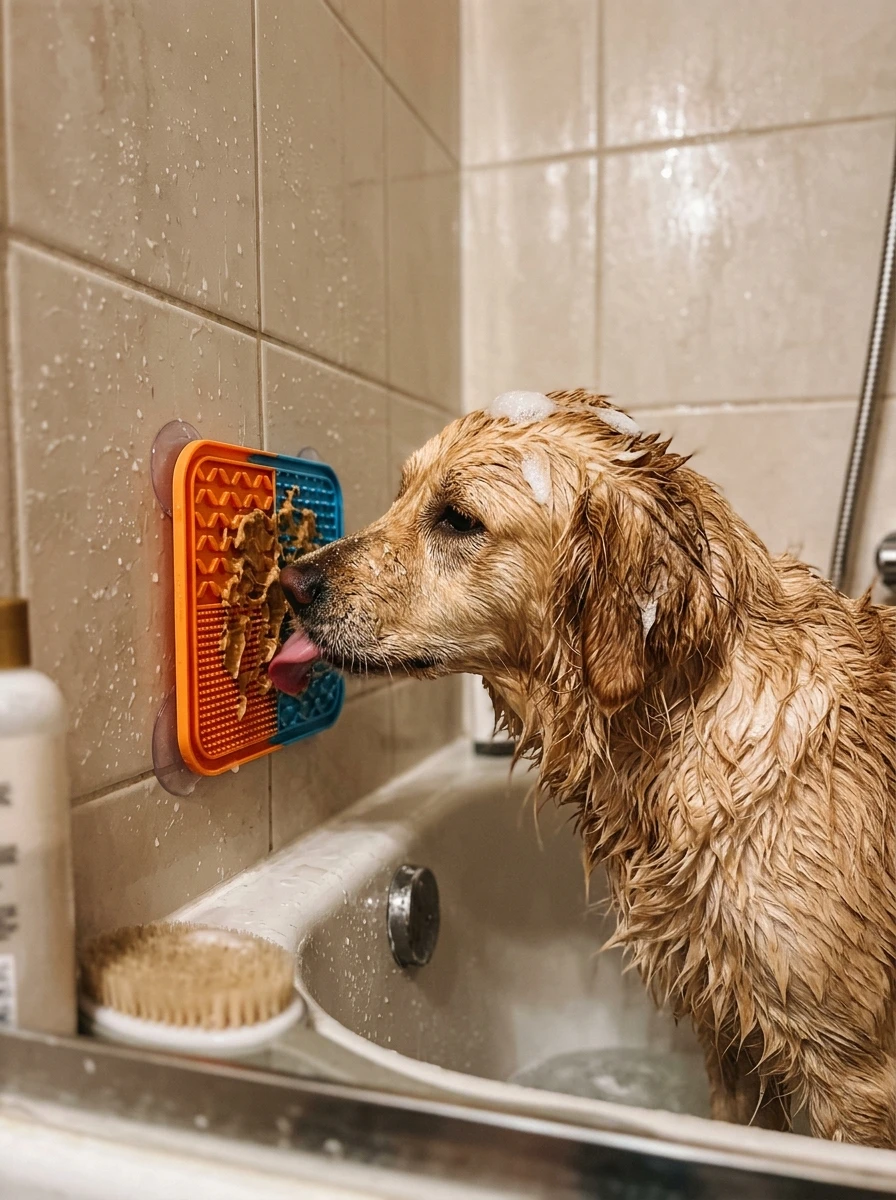
Vibe: Calm, sticky, and distracting, the bath-time trick that actually works.
Why it works: Licking releases calming endorphins and keeps a dog’s attention fixed, which turns a stressful bath into a tolerable one. A suction mat holds the reward at nose height, so your hands stay free for washing.
How to get it: Smear xylitol-free peanut butter or plain yogurt on the mat and press it to the tub wall at your dog’s head height. Let your dog lick while you wash, and remove the mat before the final rinse.
Shop The Look
Product Search
- Suction-cup lick mat
- Silicone lick mat
- Xylitol-free spreadable peanut butter
- Bath-time grooming mitt
- Non-slip bath mat
3. Puzzle Toy as a Training Reward Station: Earn It, Then Solve It
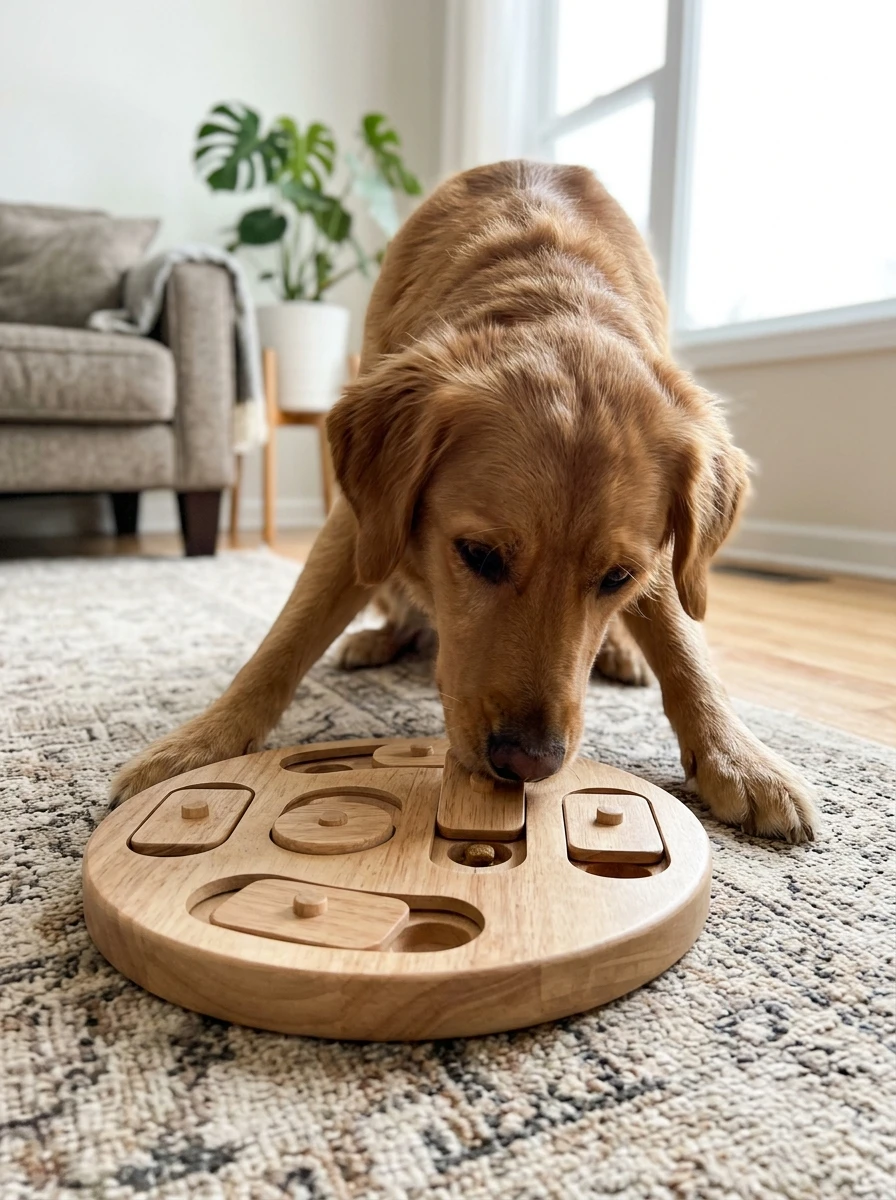
Vibe: Clever, rewarding, and earned, a toy that pays for good behavior.
Why it works: Dogs value rewards they work for more than treats handed over freely, and a puzzle toy stretches one reward into several minutes of thinking. Pairing a trained cue with puzzle time also builds patience.
How to get it: Ask for a simple cue your dog knows well, like sit or down, then present a beginner puzzle loaded with small treats. Let your dog solve it at their own pace and resist helping, since figuring it out is the point.
💡 Quick Win: Keep the puzzle by the door and use it as the reward for a calm sit before walks.
Shop The Look
Product Search
- Sliding puzzle toy
- Treat-dispensing puzzle ball
- Beginner puzzle feeder
- Puzzle toy cleaning brush
- Small soft training treats
4. Pet Camera as a Two-Way Check-In: Lunch Breaks With Your Dog
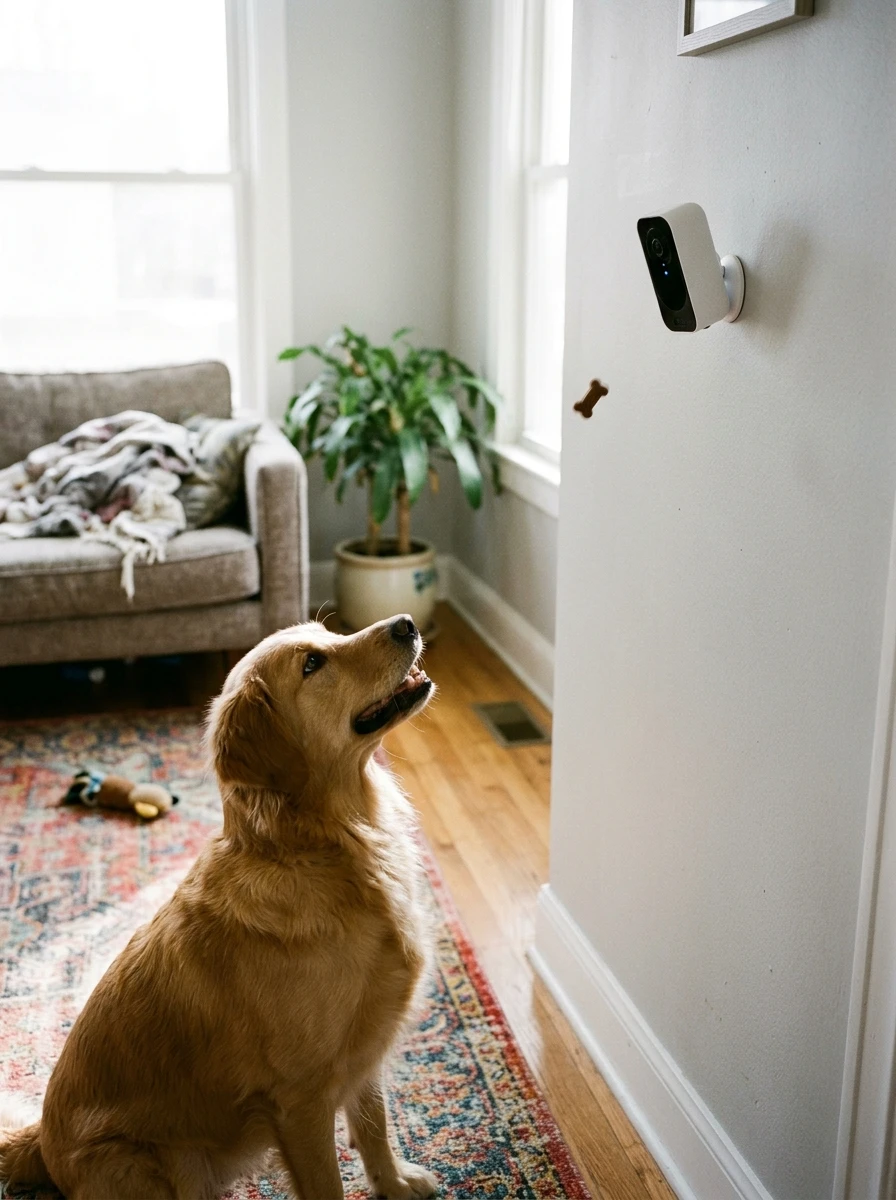
Vibe: Connected, reassuring, and a little bit fun, a check-in from anywhere.
Why it works: Separation anxiety often peaks midday when the house goes quiet, and a camera lets you see, speak to, and reward your dog from work.
How to get it: Mount the camera at your dog’s eye level near their usual resting spot and connect it to your home Wi-Fi. Set two check-in times a day rather than watching constantly, and pair each visit with a tossed treat and a calm word.
Shop The Look
Product Search
- Indoor pet camera
- Treat-tossing camera
- Camera wall mount
- Camera privacy cover
- MicroSD memory card
5. Snuffle Mat for Indoor Foraging: Nose Work Without Leaving Home
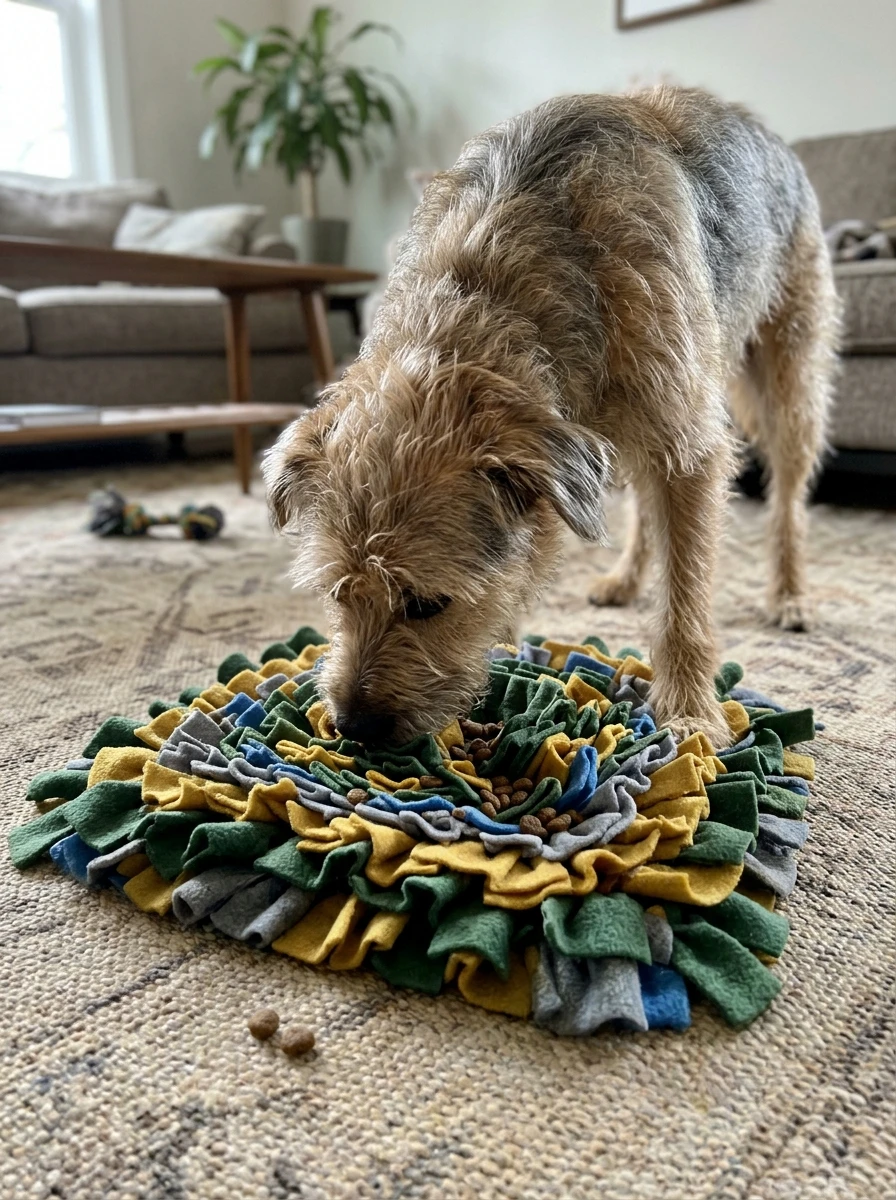
Vibe: Sniffy, slow, and satisfying, a meadow hunt on your living room rug.
Why it works: Sniffing is a dog’s richest sense, and a snuffle mat turns a bowl of kibble into a foraging hunt that burns mental energy. Ten minutes of nose work can settle a restless dog as well as a short walk.
How to get it: Scatter a handful of kibble deep into the fabric folds and let your dog search without guidance. Start with kibble near the surface, then bury it deeper as your dog gets skilled.
💡 Quick Win: Use the snuffle mat for one meal a day so foraging becomes a habit, not a rare event.
Shop The Look
Product Search
- Snuffle mat
- Snuffle ball toy
- Hide-and-seek plush toy
- Treat-hiding fabric pouch
- Crinkle snuffle mat
6. GPS Tracker for Trail Confidence: Roam Freely, Worry Less
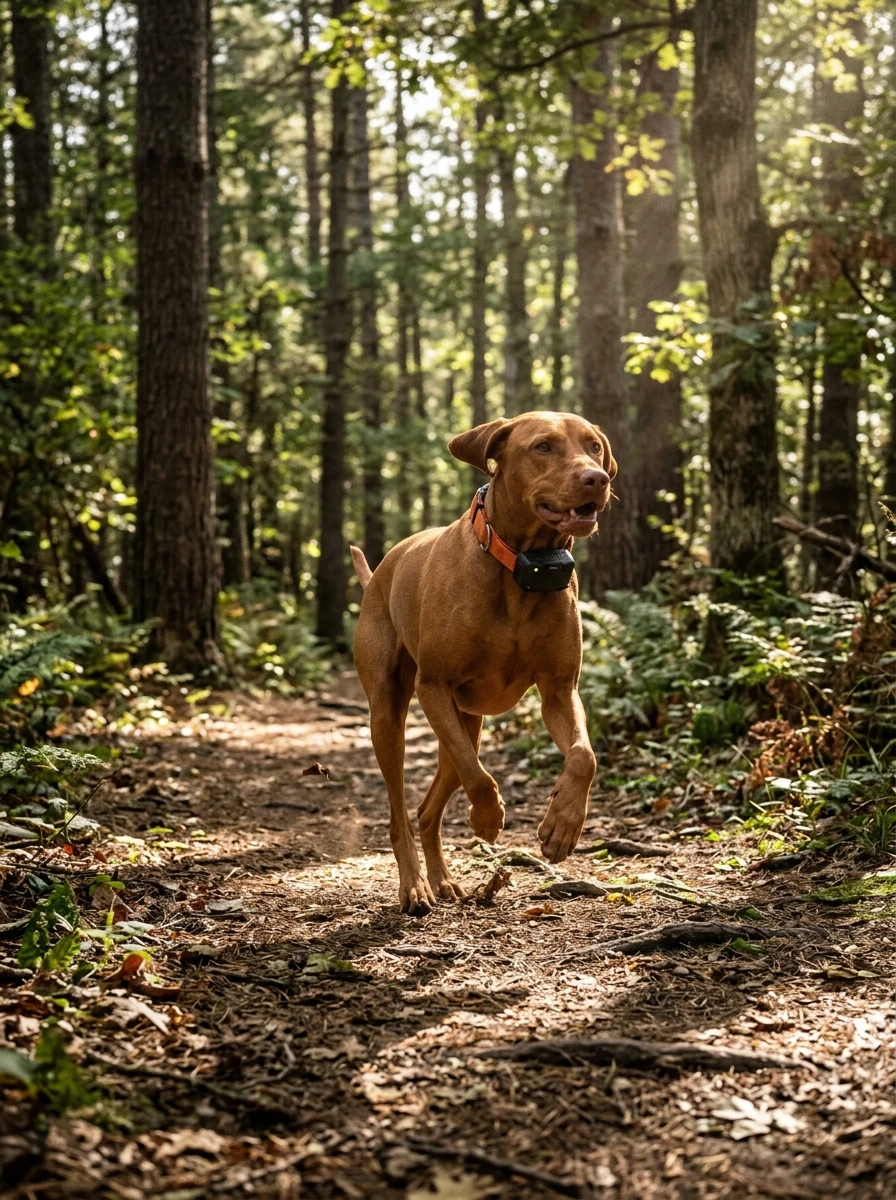
Vibe: Free, tracked, and reassuring, off-leash joy with a safety net.
Why it works: A GPS tracker shows your dog’s live location and lets you set a virtual fence around a trail or yard, so a bolted dog becomes a quick recovery instead of a panic.
How to get it: Clip the tracker to a snug collar or harness and pair it with the app before your first outing. Set a safe zone around your home and yard, test the alert by walking the boundary once, and charge the tracker after every long hike.
Shop The Look
Product Search
- GPS pet tracker
- Tracker collar clip
- Tracker charging cable
- Waterproof tracker case
- Reflective collar with tracker pocket
7. Automatic Feeder for Steady Portions: No More Guessing at Breakfast
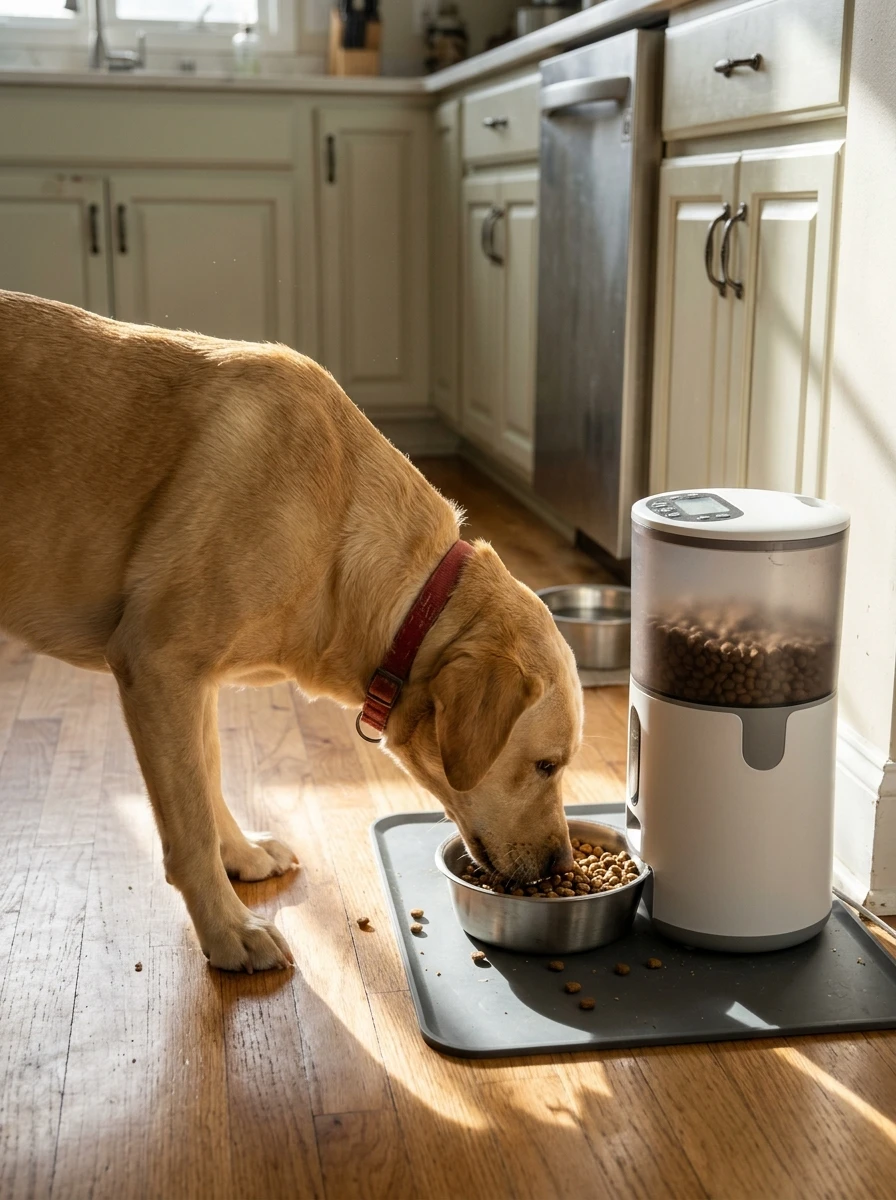
Vibe: Steady, timed, and fair, portions that never depend on your schedule.
Why it works: Irregular feeding times unsettle dogs and make weight control guesswork, but a programmable feeder serves the same amount at the same times every day. That consistency calms food-anxious dogs and helps owners track exactly how much their dog eats.
How to get it: Measure your dog’s daily portion with your vet’s guidance, then divide it across three or four timed meals in the feeder’s app or dial. Run the feeder for a week while you are home to check portions and jams, and keep a manual scoop as backup for power cuts.
💡 Quick Win: Set the first meal ten minutes before your alarm so your dog stops waking you for breakfast.
Shop The Look
Product Search
- Programmable automatic feeder
- Feeder with voice recorder
- Stainless steel feeder bowl
- Feeder desiccant pack
- Automatic feeder power adapter
8. Grooming Brush Station by the Door: Five Minutes Before Every Walk
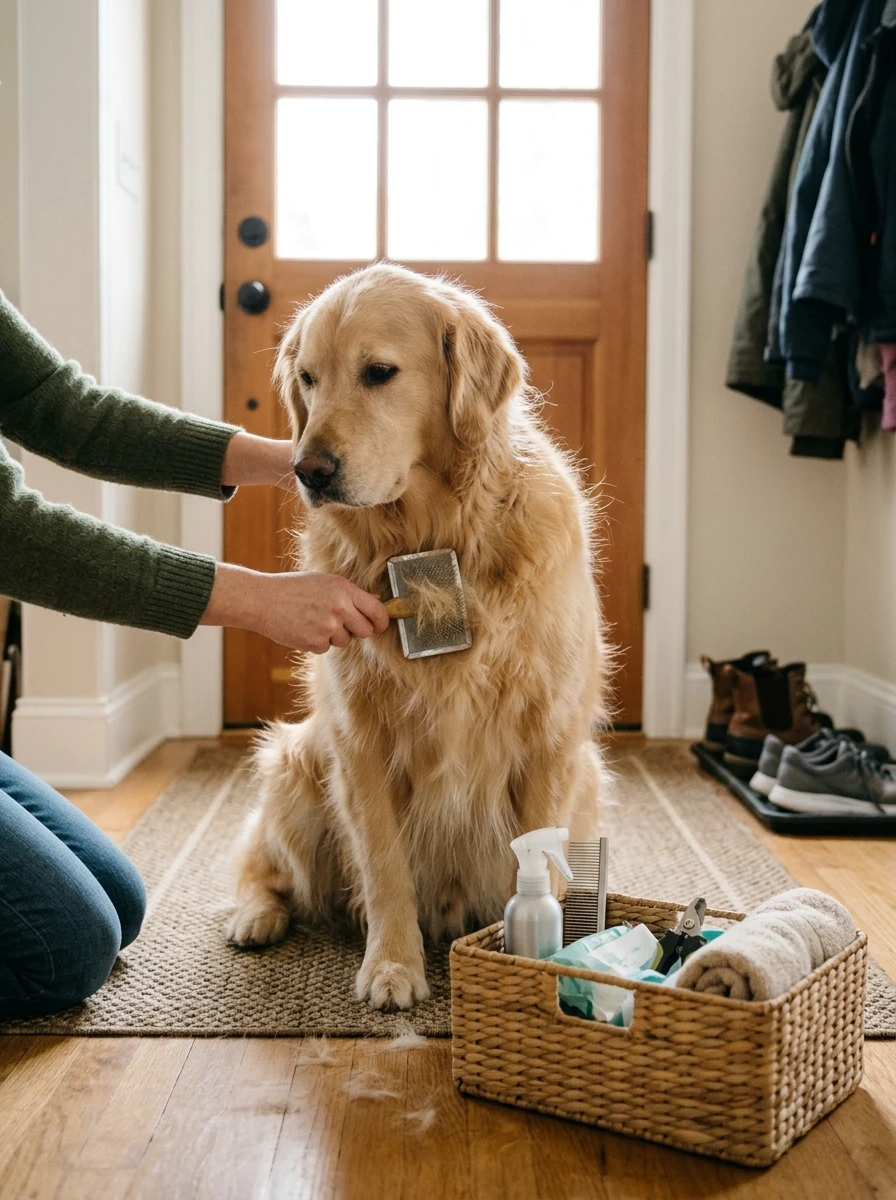
Vibe: Quick, routine, and tidy, a brush station that catches fur early.
Why it works: Most loose fur ends up on furniture because brushing happens rarely and in the wrong place, but a station by the door turns grooming into a pre-walk habit. A few strokes before going out removes the fur that would otherwise shed on the sofa all evening.
How to get it: Hang a small basket by the door with a slicker brush, a comb, and a grooming spray, and brush for five minutes before the first walk of the day.
Shop The Look
Product Search
- Slicker brush
- De-matting comb
- Grooming glove
- Grooming spray
- Brush cleaning tool
9. Collapsible Bowl Kit for Car and Trail: Water Anywhere, No Bulk
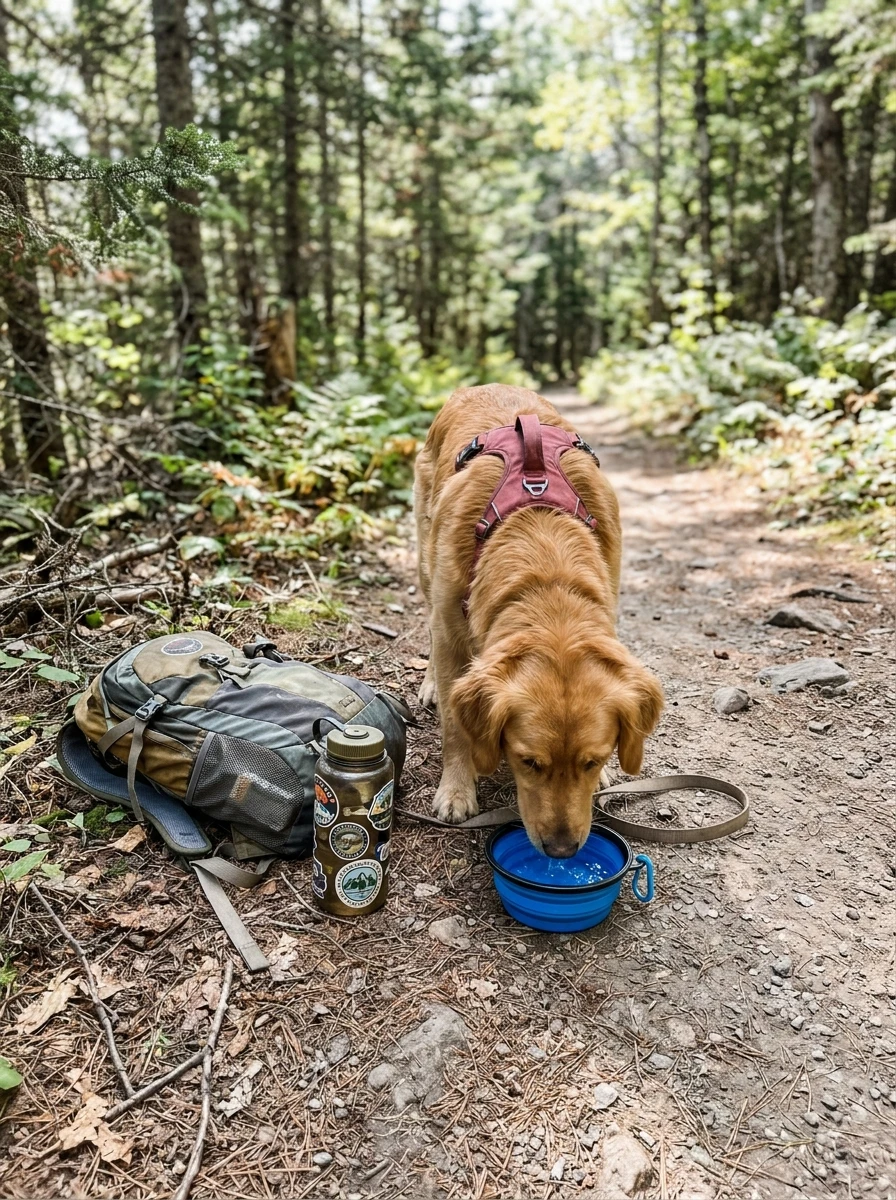
Vibe: Light, packable, and ready, hydration that fits in a pocket.
Why it works: Dogs overheat faster than people on hikes and car trips, and a collapsible bowl means water is always available without carrying a heavy dish. The bowl folds flat when empty, so it rides in a pocket, a glove box, or a treat pouch without adding bulk.
How to get it: Pack one collapsible bowl per dog plus a dedicated water bottle, and clip the folded bowl to your leash or bag with a carabiner. Offer water every twenty minutes on warm walks and at every trail stop.
💡 Quick Win: Keep a second folded bowl in the car glove box so you are never caught without one.
Shop The Look
Product Search
- Collapsible silicone bowl
- Clip-on water bottle
- Portable water dispenser
- Car seat water bowl
- Bowl carrying pouch
10. Clicker for Polite Greetings: Manners in Ten Seconds a Day
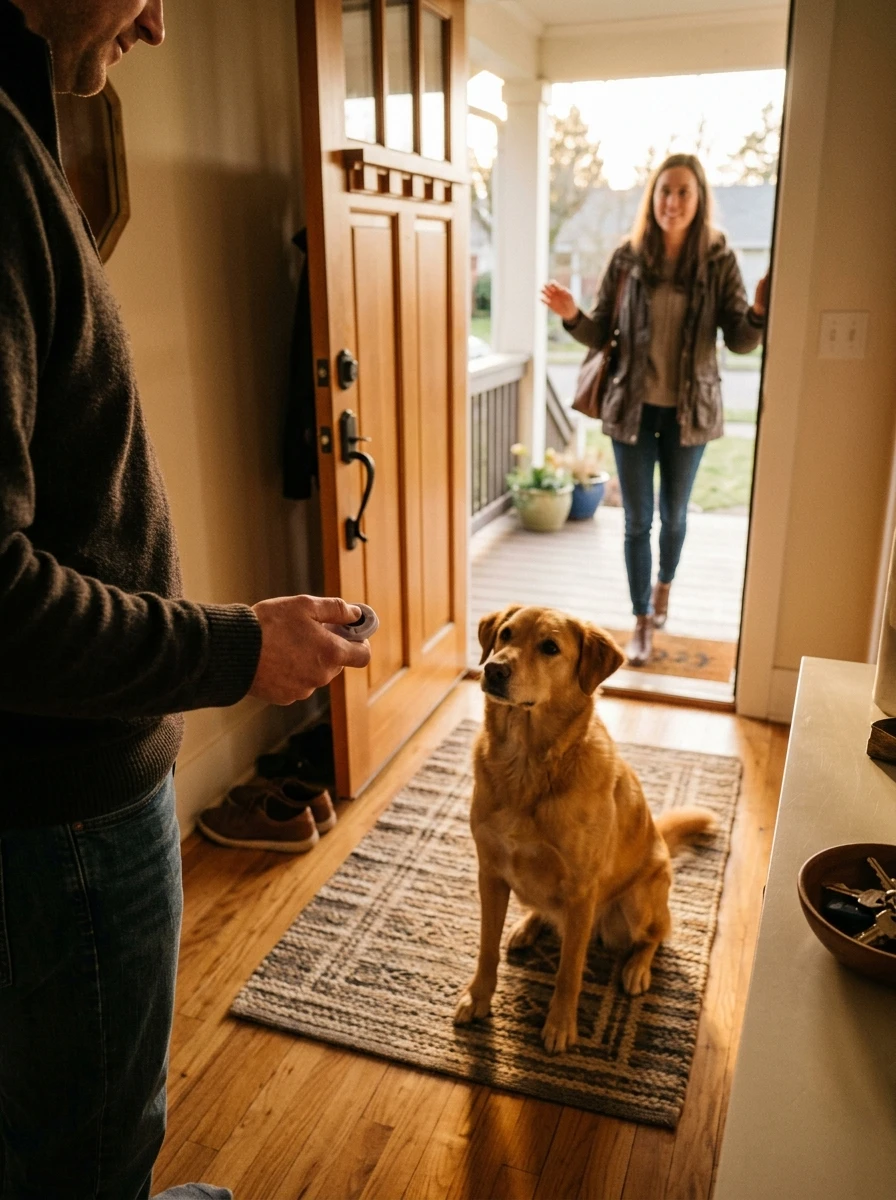
Vibe: Precise, cheerful, and fast, a tiny tool for spot-on timing.
Why it works: A clicker marks the exact second a dog does something right, which teaches faster than words alone, especially for excitable greeters. Because the sound is always identical, dogs learn the rules quickly and owners stop repeating cues that no longer work.
How to get it: Charge the clicker by clicking and treating ten times in a row with no cue at all, then use it to mark calm sits when visitors arrive. Practice for two minutes a day, keep sessions short, and always follow the click with a treat.
Shop The Look
Product Search
- Dog training clicker
- Clicker wrist coil
- Retractable target stick
- Training whistle
- Clicker training guidebook
11. Pet Fountain as a Hydration Station: Moving Water Dogs Prefer
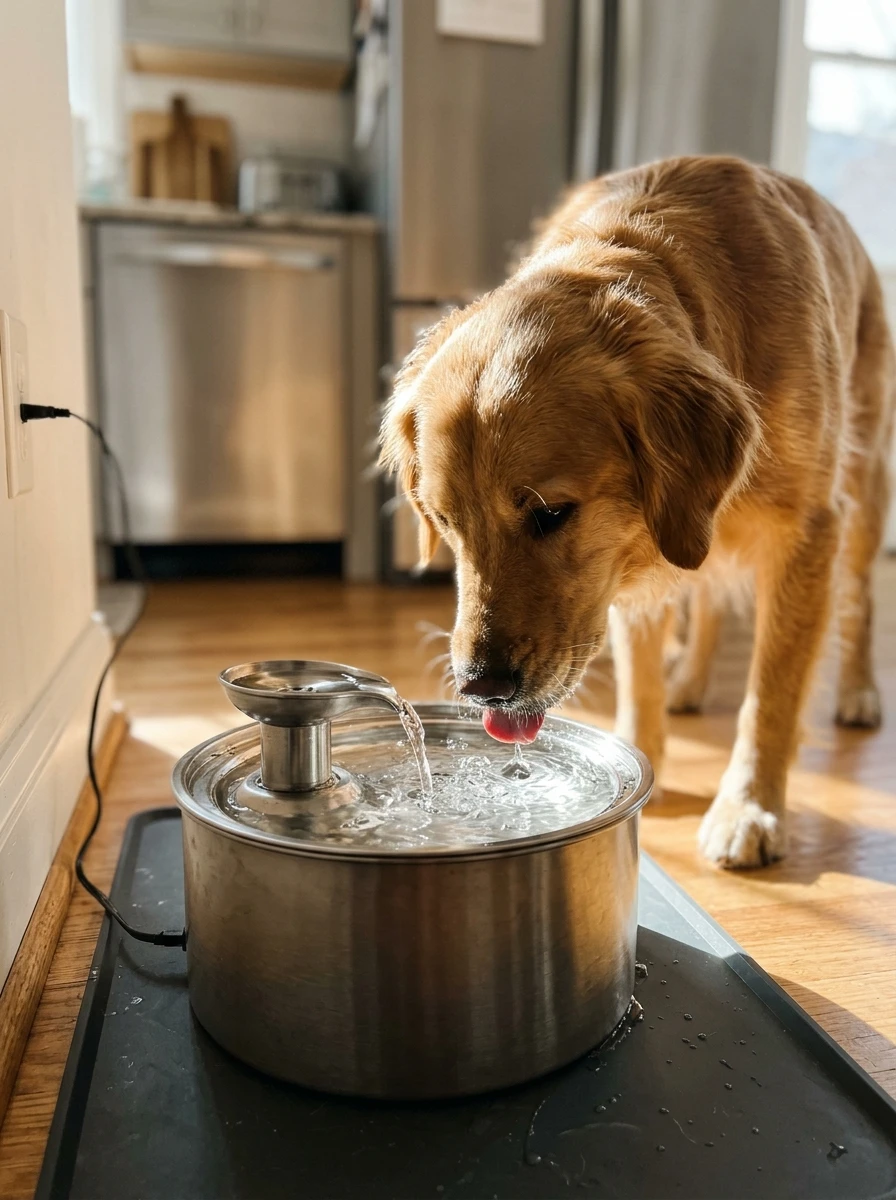
Vibe: Fresh, flowing, and inviting, water that stays appealing all day.
Why it works: Many dogs drink too little from still bowls, but moving water stays oxygenated and interesting, which encourages more frequent drinking.
How to get it: Place the fountain away from food bowls in a quiet corner and run it for a week beside the old bowl so your dog can switch over gradually. Change the filter every two to four weeks, scrub the pump monthly, and top up daily.
💡 Quick Win: Put the fountain where your dog already naps so drinking becomes part of resting, not a chore.
Shop The Look
Product Search
- Stainless steel pet fountain
- Ceramic pet fountain
- Fountain replacement filters
- Fountain cleaning brush set
- Fountain water filter cartridges
12. Calming Bed as an Anxiety Den: One Spot That Means Settle
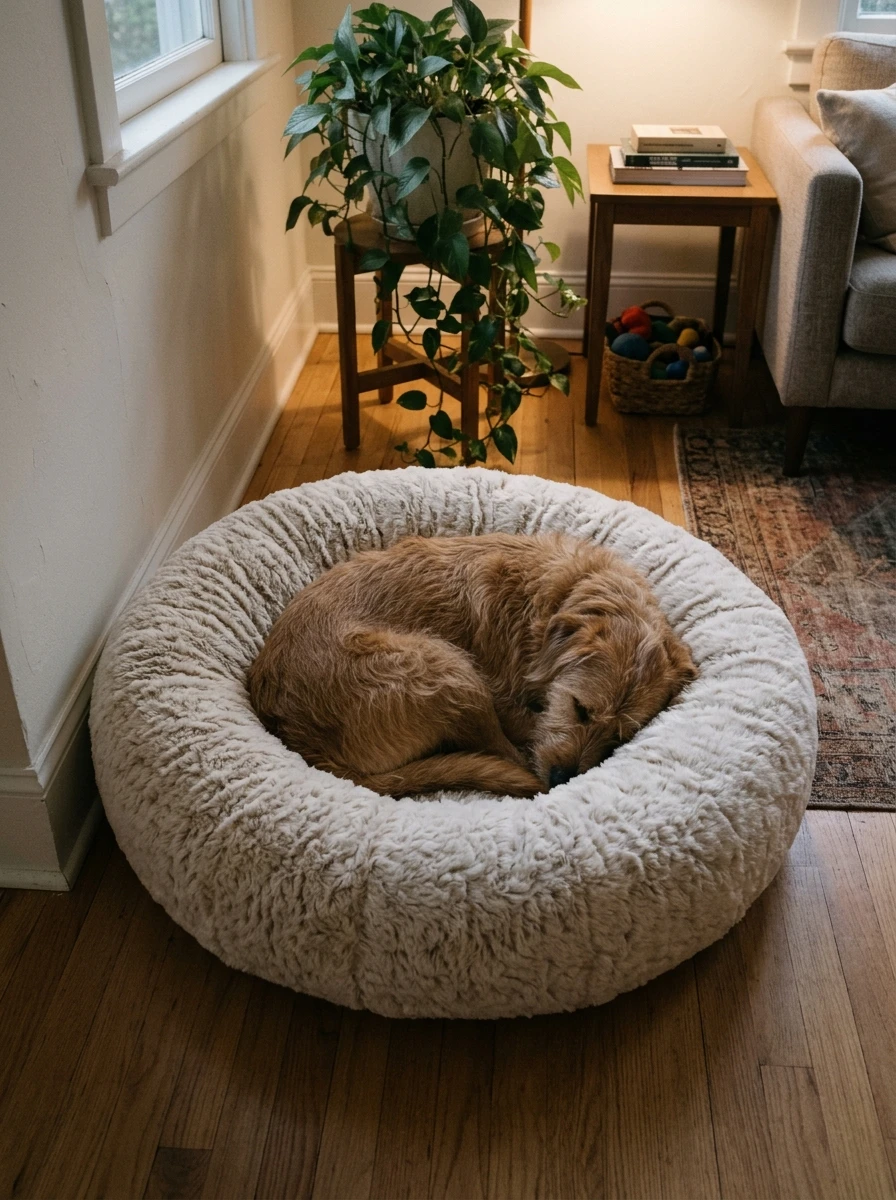
Vibe: Soft, enclosed, and safe, a den that teaches settling.
Why it works: Anxious dogs pace because no single spot feels safe, but a raised-edge bed gives them a defined place to burrow and relax. Pairing that bed with calm rewards builds a habit: the dog learns that lying there brings treats, quiet praise, and eventually sleep.
How to get it: Put the bed in a low-traffic corner away from doors and windows, and reward every voluntary settle with a quiet treat. Use the bed for short calm sessions first, then longer ones during storms or visitors.
Shop The Look
Product Search
- Calming donut bed
- Orthopedic calming bed
- Bed with raised edges
- Washable bed cover
- Bed deodorizer spray
13. Carrier Backpack for City Days: Adventures for Small Dogs
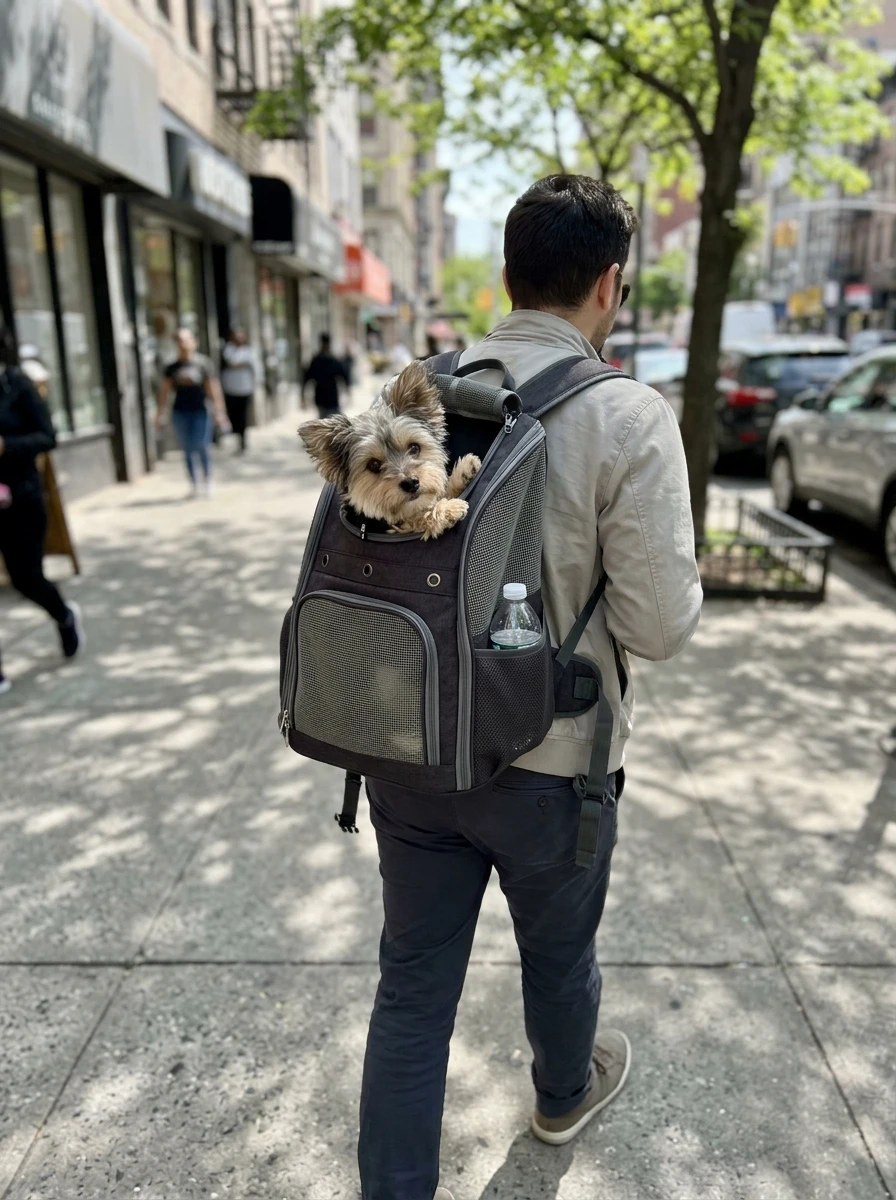
Vibe: Portable, close, and city-ready, big outings for little legs.
Why it works: Small and senior dogs tire fast on city walks, and a carrier backpack lets them join markets, cafes, and long streets without exhaustion. The enclosed space also feels secure in crowds, which reduces stress for dogs that dislike busy pavements.
How to get it: Measure your dog’s length and weight against the carrier’s limits, and let your dog explore the open backpack at home with treats inside for a few days. Start with ten-minute carries around the block before attempting a full outing, and pack a folded blanket for comfort.
💡 Quick Win: Leave the open backpack by the sofa for a week so it smells like home before the first trip.
Shop The Look
Product Search
- Dog carrier backpack
- Backpack with ventilation mesh
- Carrier chest strap pad
- Portable dog carrier blanket
- Carrier water bottle
14. Treat Pouch for Recall on Walks: Rewards Within Arm’s Reach
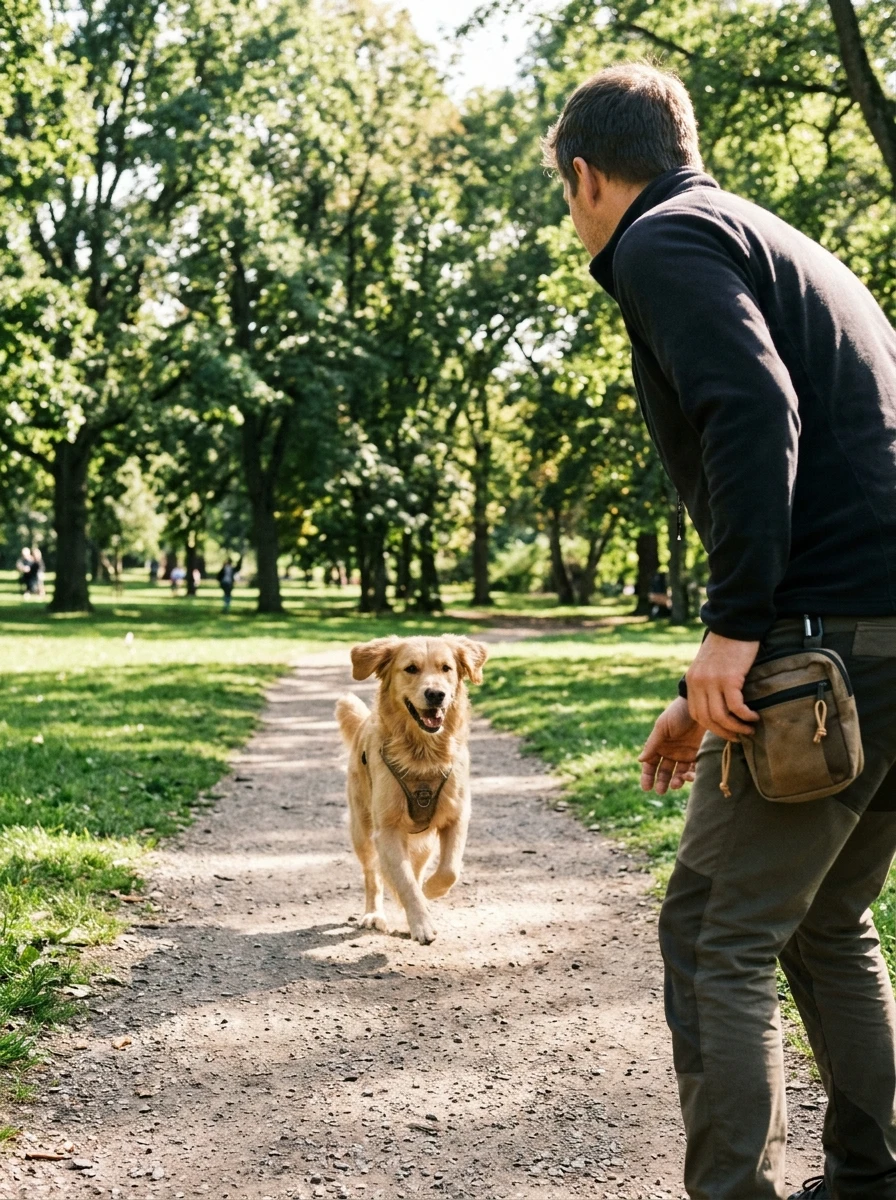
Vibe: Fast, handy, and motivating, recall that actually pays off.
Why it works: Recall fails most often because the reward arrives too late, but a waist pouch puts treats at your fingertips the second your dog turns toward you. That instant payoff builds a habit of checking in, which is the foundation of every off-leash privilege.
How to get it: Fill the pouch before every walk with small, soft treats your dog loves, and clip it to your waist where your hand falls naturally. Call your dog at random moments, reward every return generously, and release them again so coming back never means the fun ends.
Shop The Look
Product Search
- Waist treat pouch
- Silicone treat pouch
- Magnetic-closure treat bag
- Treat pouch with poop bag holder
- Belt-clip treat pouch
15. Ball Launcher for Small-Yard Fetch: Big Games in Little Spaces
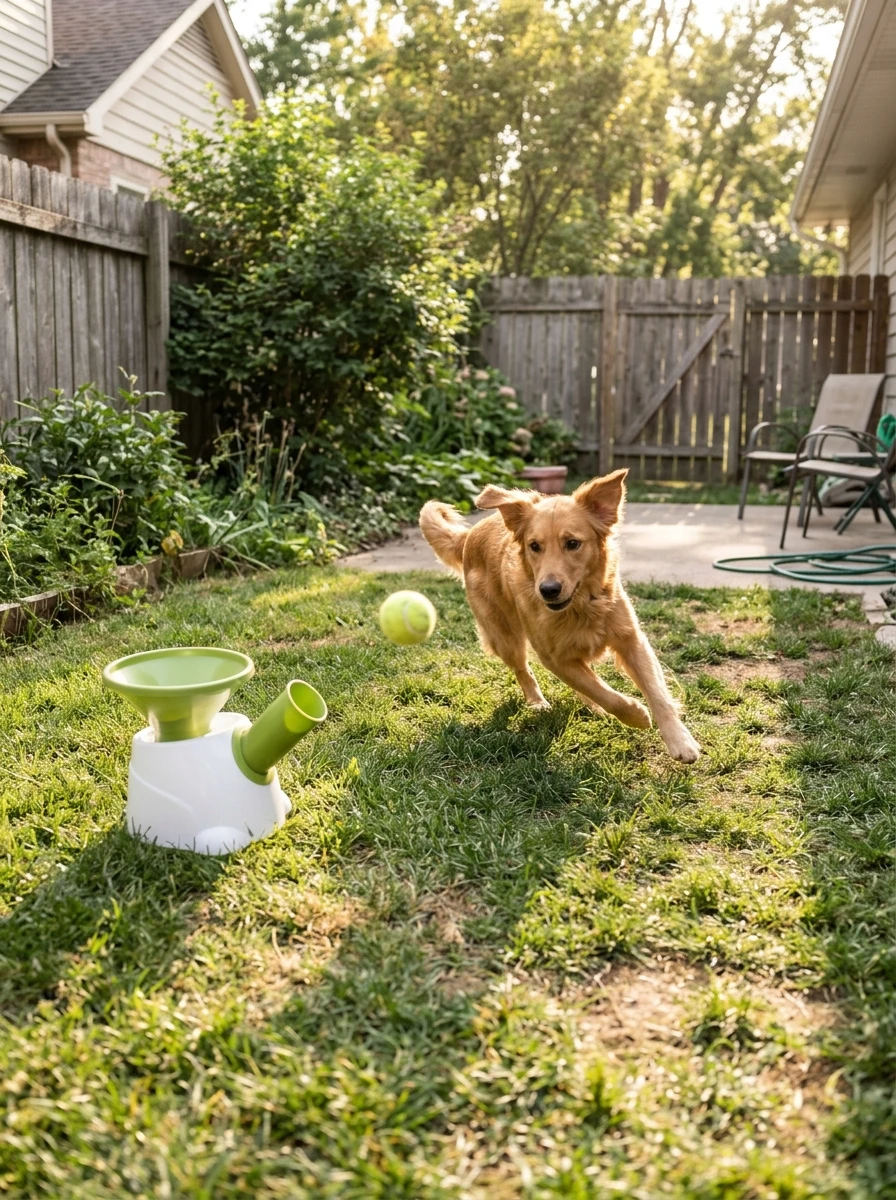
Vibe: Energetic, automatic, and compact, fetch that fits a small yard.
Why it works: High-energy dogs need sprinting, but small yards make long throws impossible, and an automatic launcher solves that with short, rapid throws. The dog also learns to drop the ball in and wait, which adds patience to exercise.
How to get it: Set the launcher to its shortest distance first and teach your dog to place the ball in the hopper with a treat reward. Supervise every session, limit play to fifteen minutes, and store the launcher indoors after use.
💡 Quick Win: Start launcher sessions after a short walk so excitement stays manageable while your dog learns the game.
Shop The Look
Product Search
- Automatic ball launcher
- Launcher tennis balls
- Manual ball thrower
- Ball storage bag
- Rechargeable launcher battery
16. Doggy Doorbell for Potty Signals: A Clear Way to Ask Out
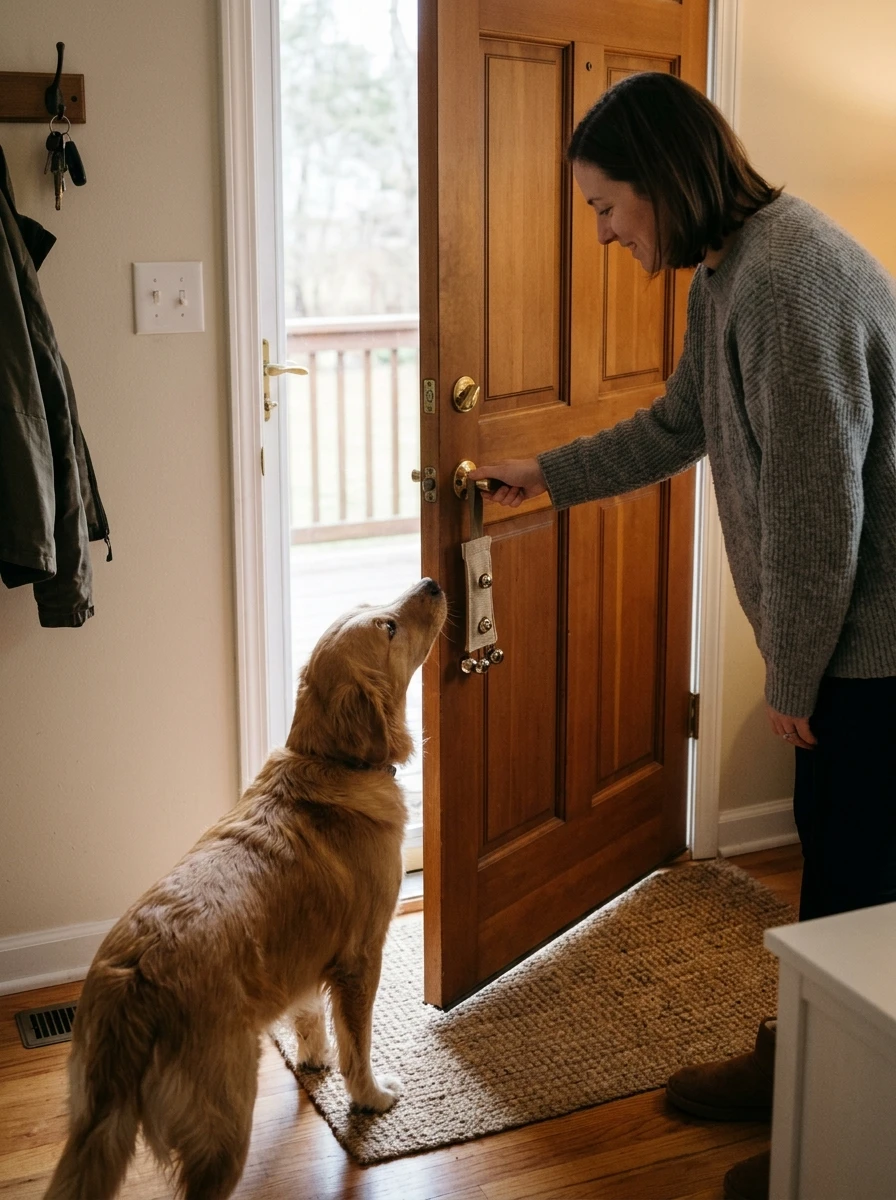
Vibe: Clear, polite, and simple, a signal you can actually hear.
Why it works: Many accidents happen because a dog’s subtle signals go unnoticed, but a doorbell turns a vague need into a sound you cannot miss. Dogs learn the cause and effect fast, and owners stop guessing whether pacing means boredom or a full bladder.
How to get it: Hang the bells at your dog’s nose height beside the door and ring them yourself every time you go out, then reward the dog for following. After a few days, pause at the door and wait for your dog to nose the bells before opening.
Shop The Look
Product Search
- Hanging doorbell for dogs
- Wireless doorbell button
- Doorbell training bells
- Adhesive doorbell mount
- Doorbell receiver chime
17. Elevated Bed for Cool Summer Naps: Airflow Underneath, Comfort on Top
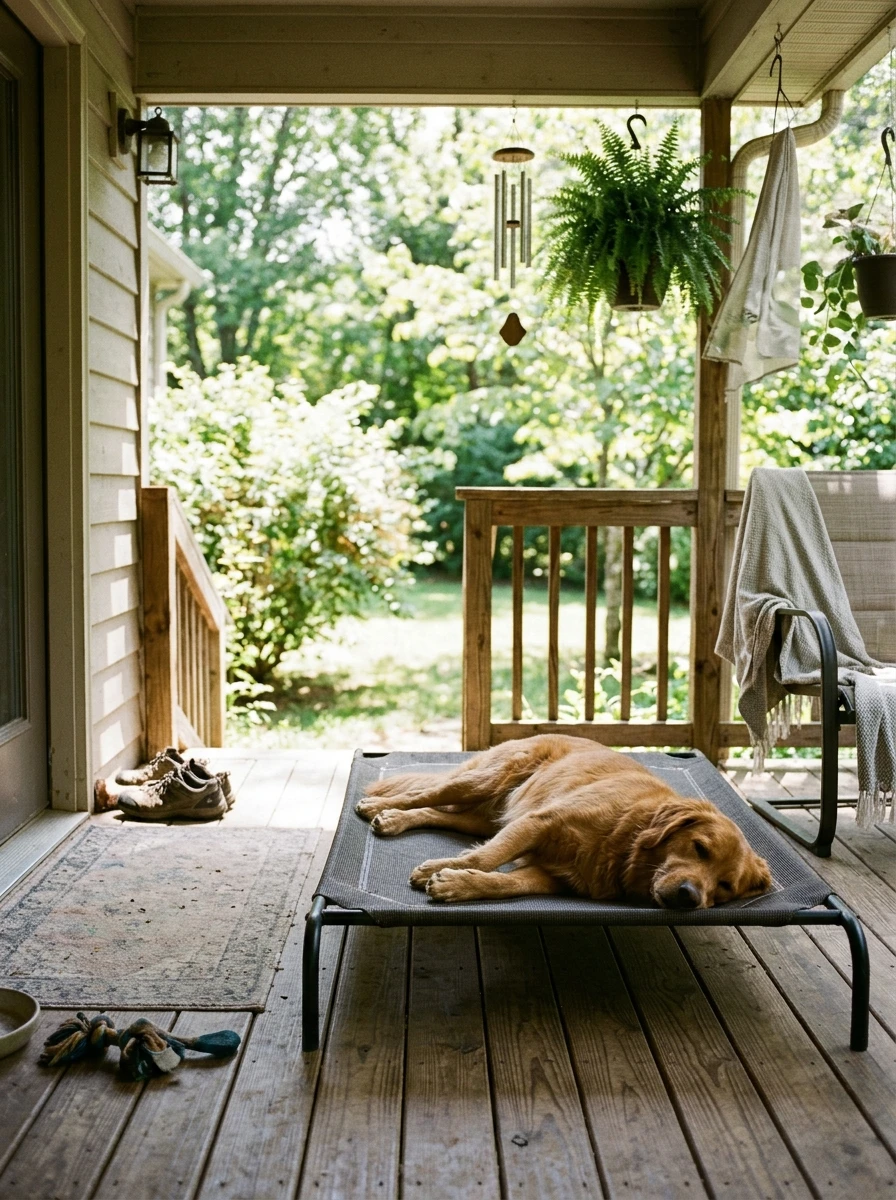
Vibe: Cool, breezy, and raised, summer naps without the hot floor.
Why it works: Dogs cool themselves through their paws and belly, and a raised mesh bed lets air flow underneath instead of trapping heat against a floor or thick cushion. That airflow keeps heavy-coated and senior dogs comfortable through warm afternoons.
How to get it: Choose a frame rated for your dog’s weight and place it in a shaded, breezy spot, indoors or on a covered porch. Add a thin washable pad for dogs that dislike bare mesh, and hose the mesh down weekly in summer.
💡 Quick Win: Put the elevated bed near a fan or open window on the first hot day so your dog discovers the coolest spot in the house.
Shop The Look
Product Search
- Elevated cooling dog bed
- Mesh cot bed
- Outdoor raised bed
- Bed canopy shade
- Replacement mesh fabric
18. First-Aid Kit for Hikes: Small Kit, Big Peace of Mind
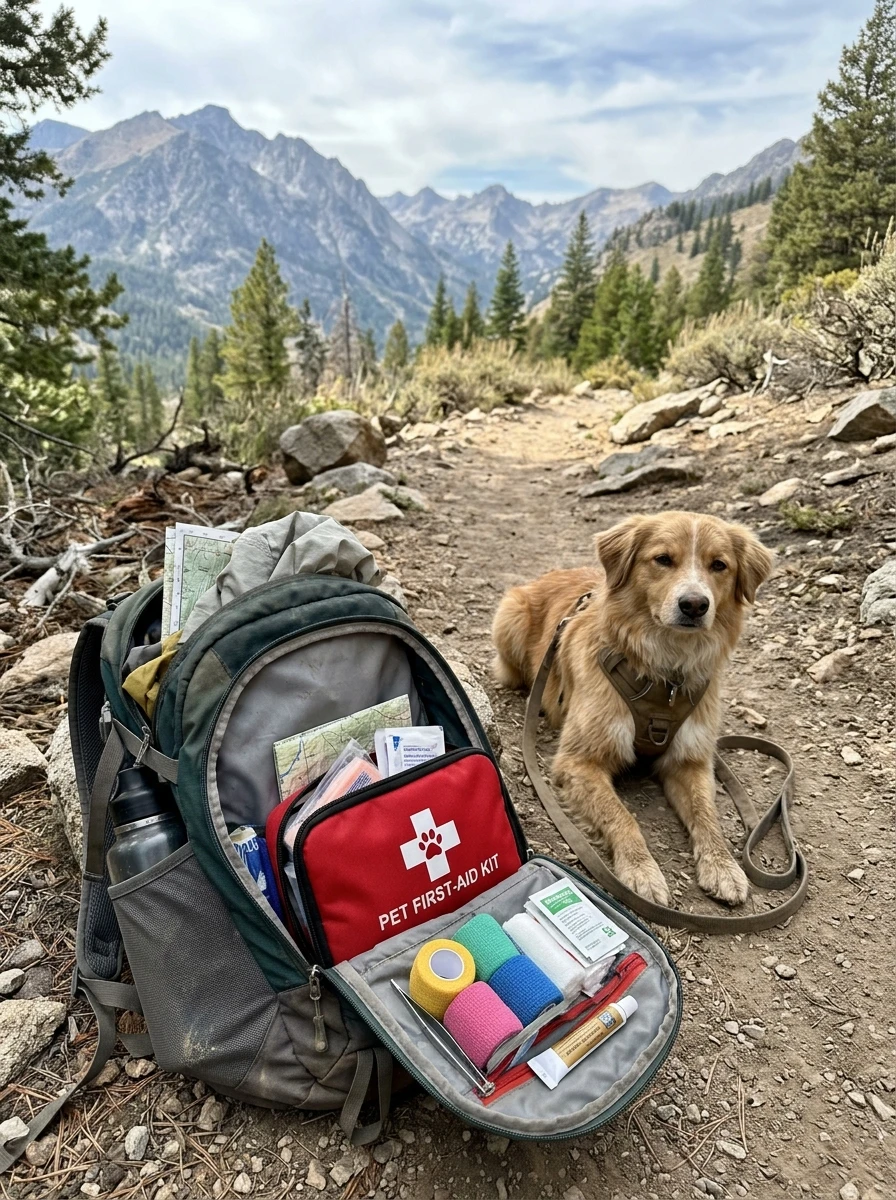
Vibe: Prepared, compact, and reassuring, help that rides along quietly.
Why it works: Cuts, ticks, and sore paws happen far from help on trails, and a small kit turns a ruined hike into a manageable pause. Having supplies ready also keeps owners calm, which keeps an injured dog calmer too.
How to get it: Pack gauze, adhesive wrap, a tick remover, paw balm, and saline in a waterproof pouch, and learn the basics of wrapping a paw before you need to. Check the kit every season for expired items and restock after every use.
Shop The Look
Product Search
- Pet first-aid kit
- Tick remover tool
- Paw balm
- Emergency pet blanket
- Pet first-aid guidebook
19. Deshedding Tool for Furniture Control: Fur Stops at the Source
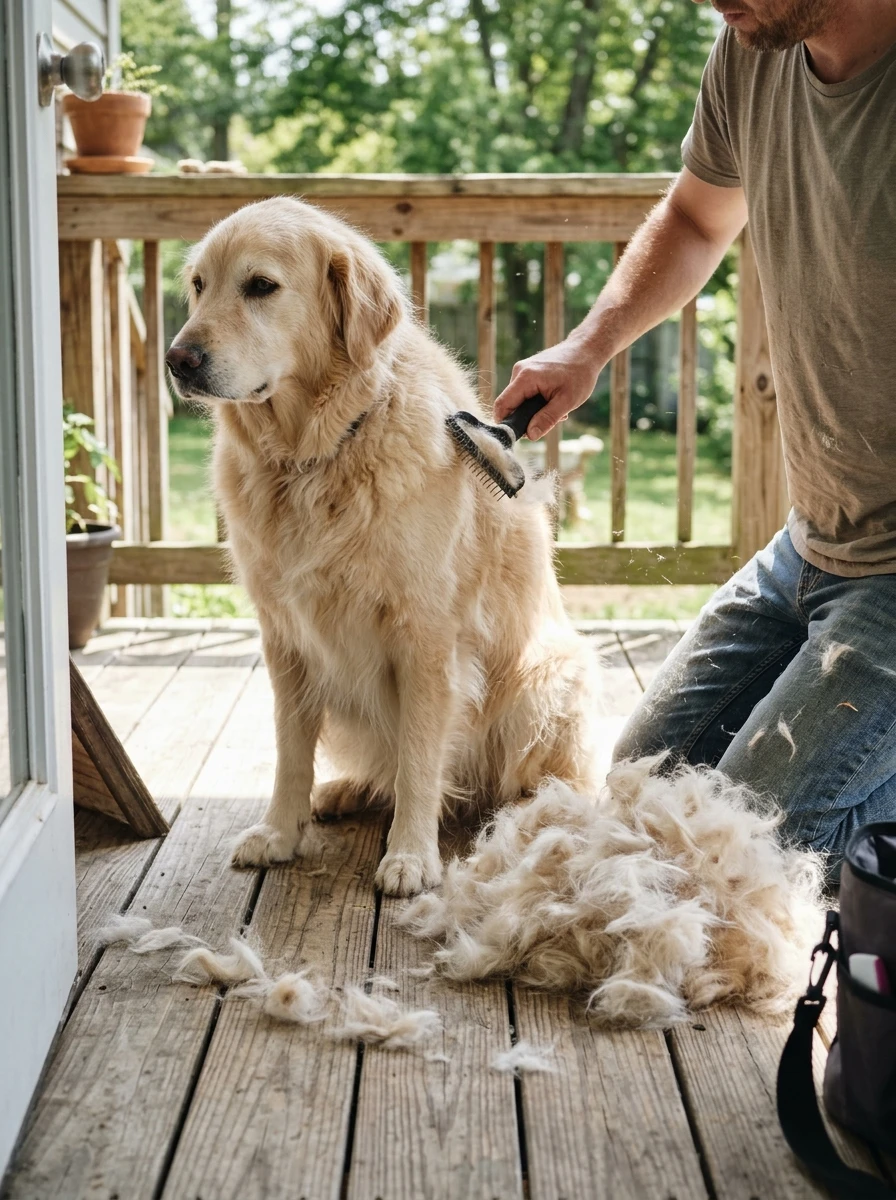
Vibe: Thorough, seasonal, and satisfying, shedding handled before it spreads.
Why it works: Regular brushing removes surface fur, but a deshedding tool reaches the loose undercoat that actually ends up on sofas and clothes. Used gently and regularly, it cuts household fur dramatically and reduces mats during heavy shedding seasons.
How to get it: Brush outdoors or over a sheet, working in short strokes with the coat and never pressing hard on skin. Use the tool once a week during shedding season and once a month otherwise, and stop if skin reddens.
💡 Quick Win: Deshed right before bath day so loose fur washes away instead of landing on clean furniture.
Shop The Look
Product Search
- Deshedding brush
- Undercoat rake
- Fur removal roller
- Grooming vacuum attachment
- Anti-static grooming spray
20. Long Leash for Sniff Walks: Freedom With a Safety Line
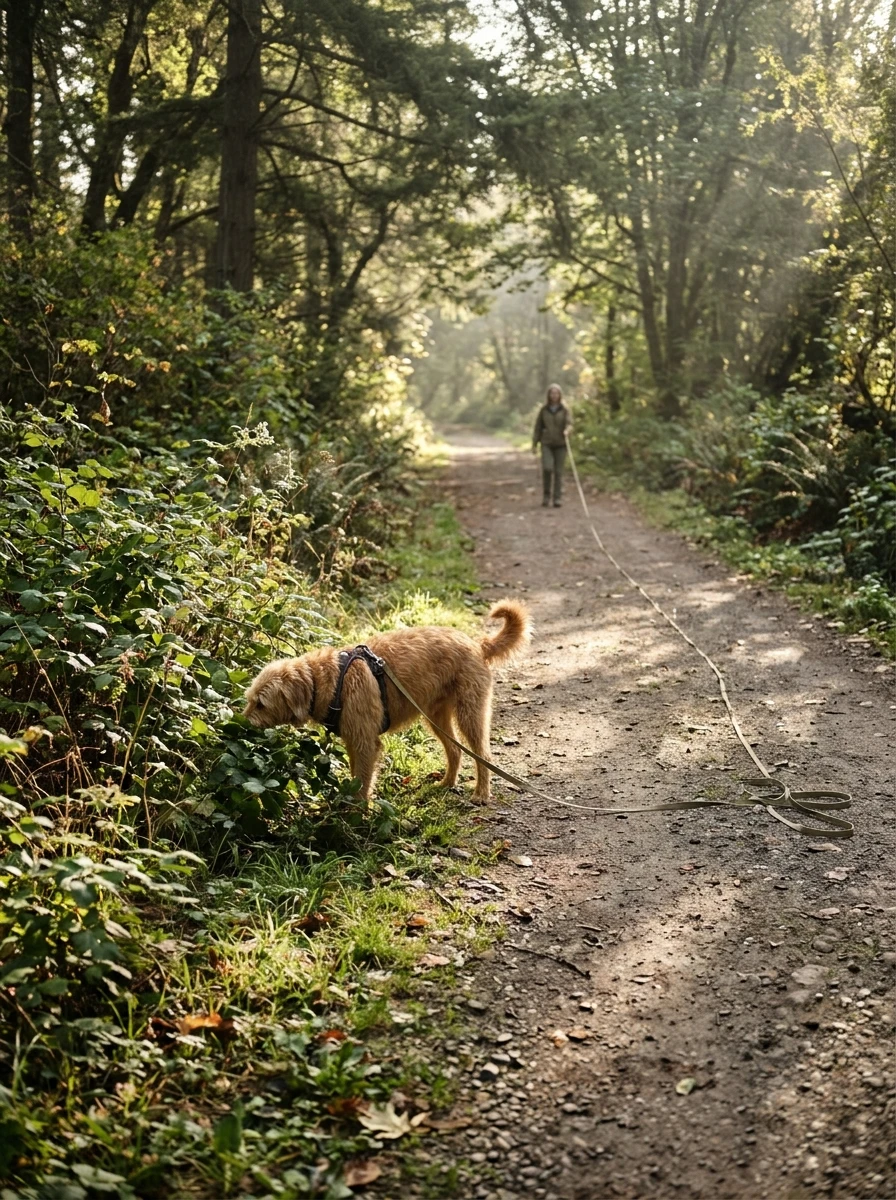
Vibe: Free, sniffy, and safe, exploration without the risk of running off.
Why it works: Dogs experience the world through smell, and a short leash constantly interrupts that, but a long line lets them roam, sniff, and choose a path while you stay in control. Sniff walks tire dogs mentally and reduce pulling, since the dog no longer fights for every extra foot.
How to get it: Choose a 20 to 30-foot line for open parks and a shorter one for busier paths, and attach it to a harness rather than a collar to avoid neck strain. Let the line drag loosely and only gather it near roads, other dogs, or cyclists.
Shop The Look
Product Search
- 30-foot long line leash
- Biothane long leash
- Leash waist belt
- Hands-free leash adapter
- Leash storage reel
21. Calming Speaker for Alone Time: Sound That Settles the House
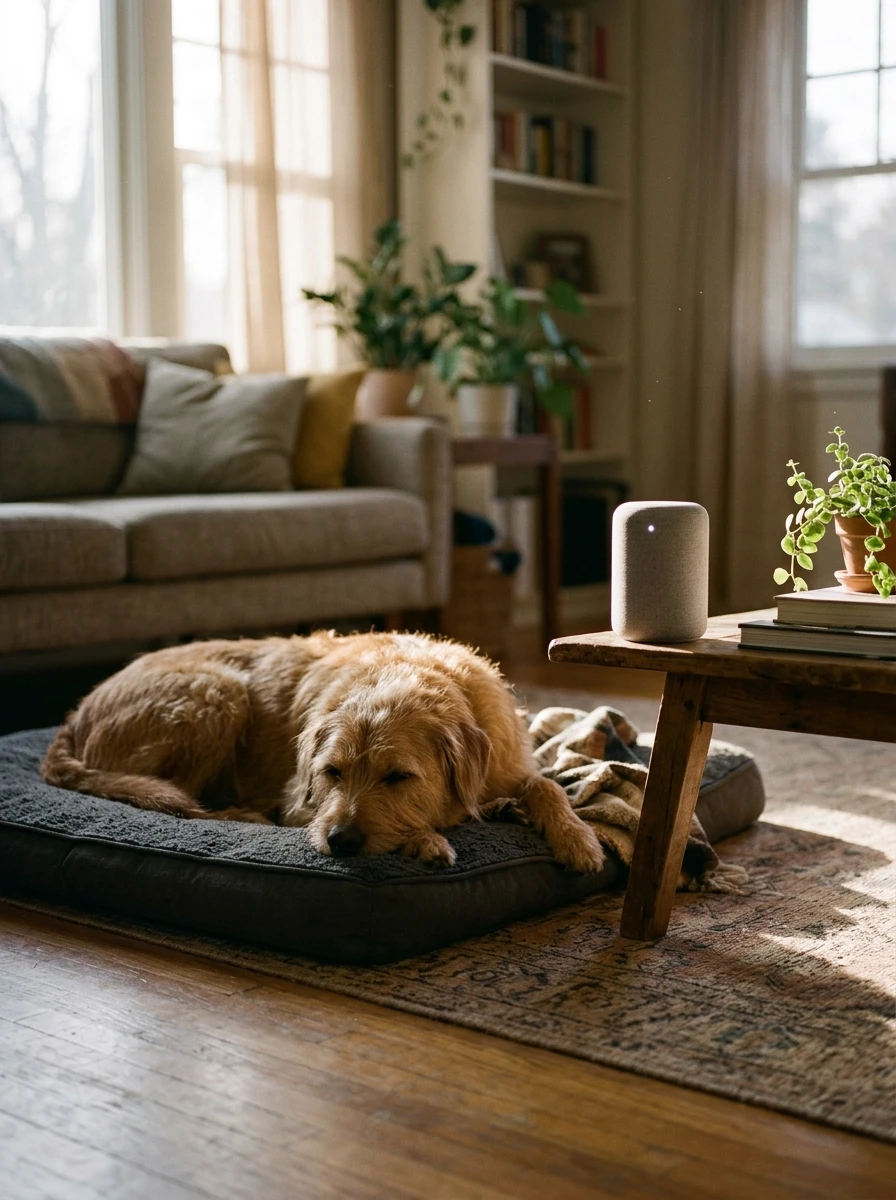
Vibe: Gentle, steady, and soothing, background sound that fills the silence.
Why it works: Sudden silence makes every outside noise startling for a home-alone dog, but steady music or white noise masks doorbells, traffic, and footsteps. Over time the sound itself becomes a cue for rest, so the dog settles faster when it starts playing.
How to get it: Place a small speaker near your dog’s resting spot and play calming music or white noise at low volume for thirty minutes before you leave. Keep the volume conversational, never loud, and use a timer so the sound stops after a few hours.
💡 Quick Win: Start the speaker during your own relaxing evenings first so the sound already means rest before alone time.
Shop The Look
Product Search
- Pet calming music speaker
- White noise machine
- Bluetooth speaker for pets
- Smart speaker timer plug
- Speaker stand mount
22. Washable Potty Pads for Apartment Backup: Rainy Nights, Solved
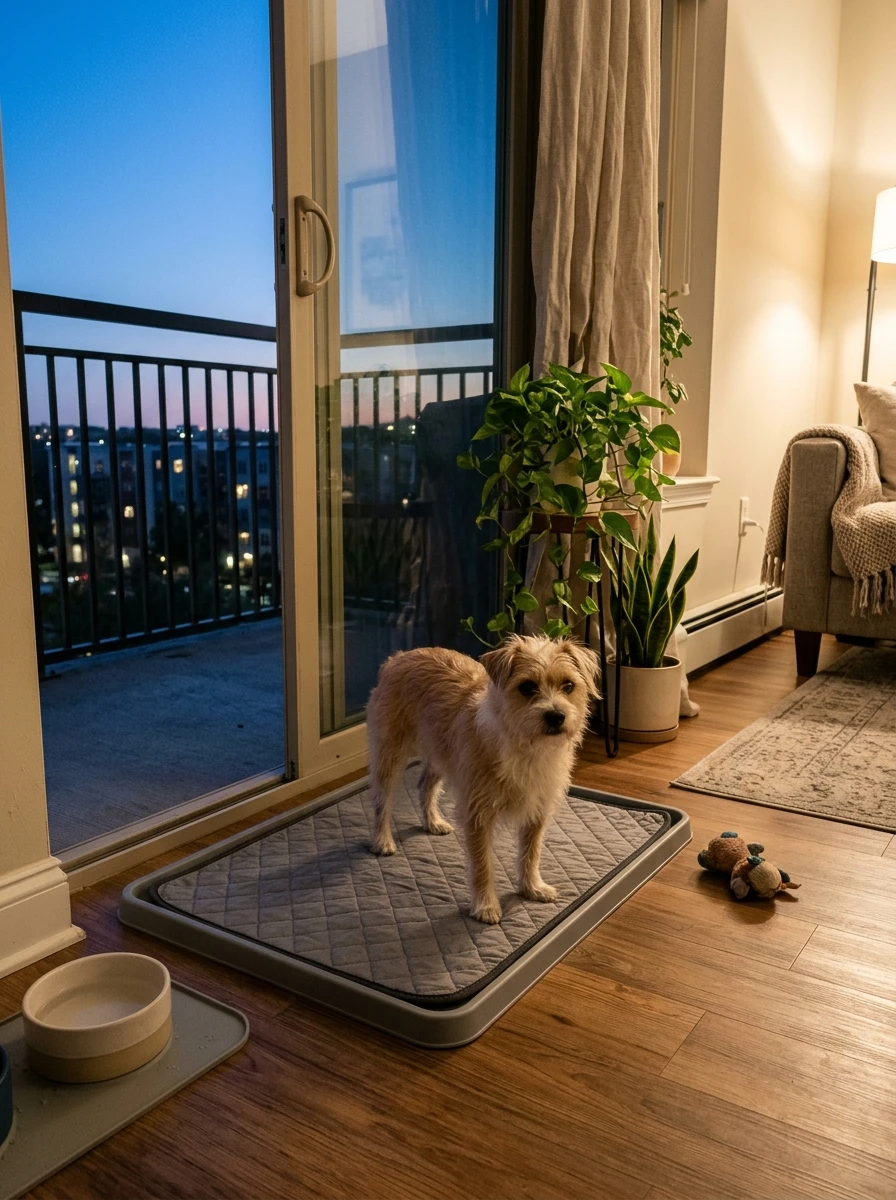
Vibe: Practical, clean, and backup-ready, a plan for nights when going out fails.
Why it works: Apartments, storms, and late nights make outdoor trips hard, and a washable pad gives small, senior, or unwell dogs a dignified backup. Unlike disposable pads, washable ones save money and waste over time, and a tray keeps them flat and in place.
How to get it: Place the tray near the door your dog already associates with going out, and reward every use at first. Wash pads on hot with unscented detergent and air-dry them, keeping at least three in rotation so one is always clean.
Shop The Look
Product Search
- Washable pee pads
- Potty tray with grate
- Pad holder tray
- Odor-control pad spray
- Pad laundry bag
How to Start Your Dog Supply Remix
Start with the drawer, not the store. Pull out every dog gadget you already own, test what still works, and pick one item to use in a new way this week, like the slow feeder as a puzzle or the lick mat as a bath helper. The most common mistake is buying a full set of new gadgets at once, which overwhelms the dog and leaves most items unused. Three budget items under $50 cover nearly everything to begin: a slow feeder bowl, a lick mat, and a treat pouch. Expect the first week to teach you something, whether it is a puzzle your dog ignores or a feeder portion that needs adjusting, and expect the second week to feel noticeably smoother.
FAQs
Do I need expensive gadgets to enrich my dog’s day?
No, most enrichment comes from using ordinary supplies in new ways rather than buying expensive gear. A slow feeder, a snuffle mat, and a lick mat cost little and turn meals, baths, and alone time into brain work. Start with one or two cheap tools and watch which ones your dog actually enjoys before spending more.
Are automatic feeders safe to leave running all day?
Automatic feeders are safe when set up carefully and checked regularly, but they are not a set-and-forget solution. Use them for measured meals rather than free feeding, and test portions and jam resistance for a week while you are home.
How do I introduce a puzzle toy to a dog that gives up fast?
Start with the easiest possible version so your dog wins quickly and learns that puzzles pay off. Use a beginner puzzle with treats visible near the surface, and help only by nudging a compartment the first time. Keep sessions under five minutes and end while your dog is still interested, so the next session starts with enthusiasm.
Can a GPS tracker replace a leash or fence?
No, a GPS tracker is a recovery tool, not a restraint, and it cannot stop a dog from running into traffic or trouble. It tells you where a lost dog is, but it does nothing to prevent the escape in the first place. Leashes, fences, and recall training remain the real safety measures, while the tracker adds a backup layer for hikes, travel, and off-leash areas.
How often should I wash reusable dog supplies?
Wash food and water items like bowls, mats, and feeder parts at least weekly, and wash fabric items like beds, throws, and potty pads every one to two weeks depending on use. Silicone mats and bowls can go in the dishwasher if the maker allows it, while fabric items need hot water and unscented detergent.
Your Gadget Drawer Is Ready to Work Harder
Across these 22 ideas you have covered feeding, training, grooming, travel, tech, comfort, play, and safety, a full toolkit for easier dog days. Start small rather than buying everything at once, and let your dog’s reaction guide the next tool you try. Today, pull one forgotten gadget out of the drawer and use it in a new way, whether that means freezing a slow feeder for dinner or hanging a doorbell by the back door. Save this guide and pin it for your next supply refresh, so the clever uses are never far away.