
15 Irresistible Dog Training Tips Every Owner Should Try
Dog training is the practice of teaching your dog, through short and repeated rewards, which behaviors pay off. Here are 15 dog training tips every owner should try, each with the gear, cost, and one mistake to skip. Think of the tiny click of a clicker, the warm weight of a muzzle resting on your knee, the soft thump of a tail on hardwood, and the nutty smell of a freshly opened treat pouch. A well-trained dog doesn’t feel like a project. It feels like a quiet understanding between you and an animal who finally gets what you mean.
Here are 15 ideas worth saving — and stealing.
Why Dog Training Tips Every Owner Should Try Work So Well
Reward-based training grew out of animal learning research in the 1940s. Marine mammal trainers later refined the clicker, and Karen Pryor helped bring it to dog owners in the 1990s. What makes it distinct is that you pay your dog for good choices instead of correcting mistakes, so your dog actively wants to cooperate.
The core kit is small. You need pea-sized soft treats (freeze-dried liver or tiny chicken pieces), a box clicker, a 6-foot flat nylon leash, a front-clip harness, and a 15-foot long line. Dogs see blues and yellows clearly, while reds and greens blur into brownish gray. That’s why blue and yellow gear is easy for them to spot.
Training is trending because of the pandemic puppy boom, plus short-form videos that show trainers’ methods in real time. Veterinary behavior groups also back force-free methods, which has pushed them into the mainstream.
Beginners and small budgets can do all of this. A starter kit costs about $30 to $40. The honest limit is that aggression, bite history, or severe separation anxiety need a certified professional, not a tip list.
| Style at a Glance | |
| Philosophy | Reward what you want, manage what you don’t |
| Key Tools | Clicker, 6-ft leash, front-clip harness, long line, snuffle mat |
| Key Rewards | Freeze-dried liver, tiny chicken bites, soft peanut-free training treats |
1. Charge the Clicker in 10 Minutes for Under $10
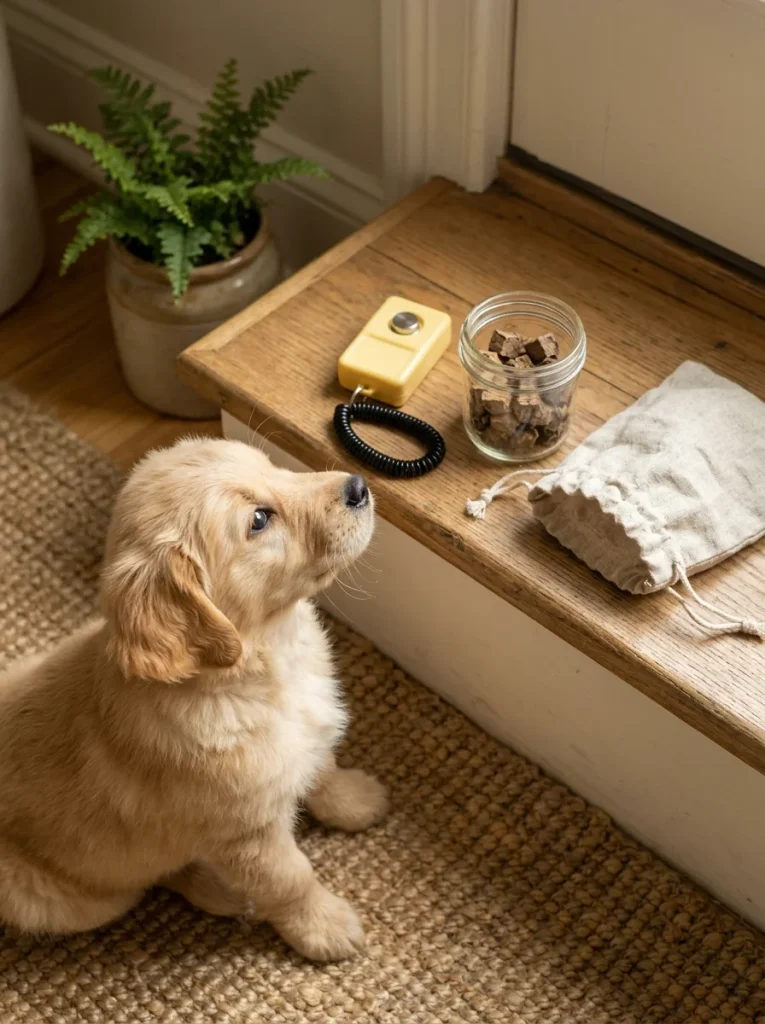
A clicker is a $5 tool that gives your dog a precise “yes.” Each click marks the exact moment of good behavior, and the treat that follows makes the sound meaningful. Ten minutes of “charging” is all it takes before every other lesson gets easier.
Gear note: Cut 20 pea-sized treats and click-then-treat 20 times in a quiet room, with no commands yet. Total cost is about $6 and the session takes 5 minutes. Beginners often reach for the treat before clicking, so always click first.
Color note: A butter-yellow clicker against an oatmeal rug is easy for you and your dog to spot. The soft palette also keeps the training corner looking calm and intentional.
Reward swap: Replace crunchy biscuits with freeze-dried liver cut into ¼-inch cubes, which adds about $3 per bag. It suits food-driven puppies.
💡 Quick Win: Snap the clicker onto a stretchy wrist coil so it’s always within reach.
Shop The Look
- Box-style training clicker, 2-pack
- Stretchy clicker wrist coil
- Freeze-dried liver training treats
- Waterproof belt-clip treat pouch
- Glass treat jar with bamboo lid
Also view: 16 precious ideas for dog breeds you’ll love at home
2. The “Be a Tree” Loose-Leash Walk That Ends Pulling
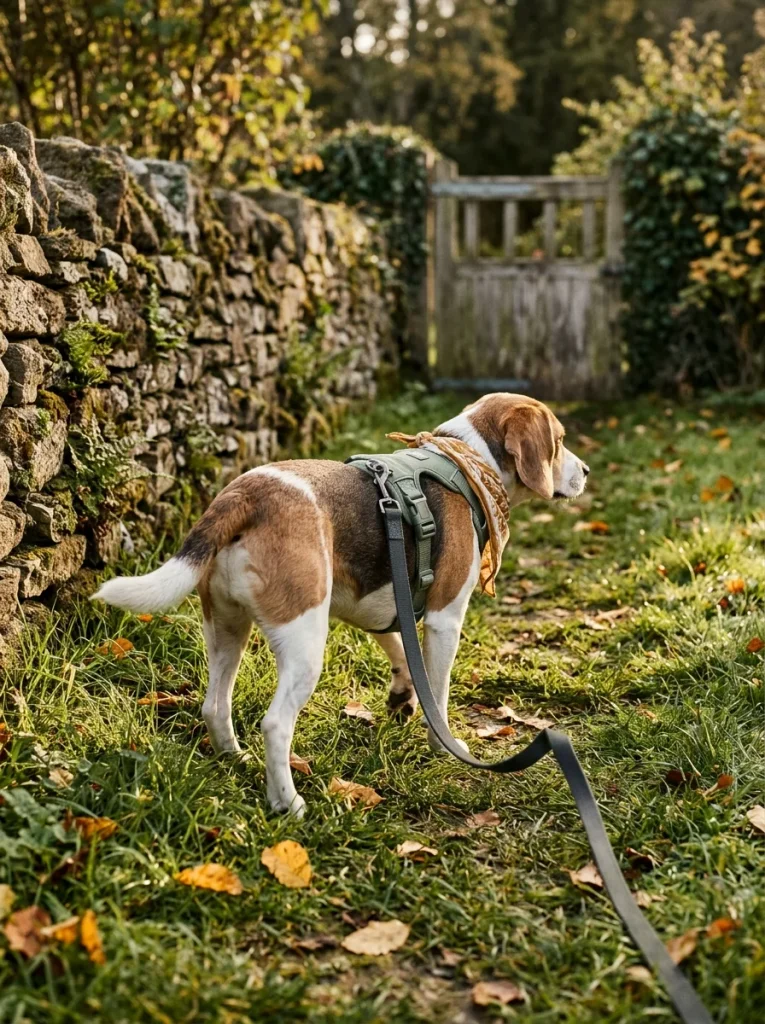
When the leash tightens, you stop moving like a tree. Pulling stops paying off, and walking beside you starts to. It works for puppies and for adults who’ve been dragging owners for years.
Gear note: Use a 6-foot flat leash (never retractable) and a front-clip harness, about $30 together. Carry 10 treats per walk and reward every step where the leash hangs loose. The usual mistake is giving a few steps of slack after a pull, which teaches the dog that pulling works.
Color note: Sage green and charcoal gear blends with trees and sidewalks, so the whole walk looks cohesive.
Reward swap: Use small cubes of cooked chicken breast, about $4 more than store treats. This suits strong-willed dogs who ignore dry biscuits.
Shop The Look
- Front-clip no-pull dog harness
- 6-foot padded-handle nylon leash
- Reflective walking bandana
- Poop bag holder with roll
- Collapsible silicone water bowl
3. The Recall Game: A $15 Dog Training Tip for Reliable “Come”

Recall is the cue that can save a dog’s life, so it deserves its own practice. A long line gives your dog freedom while you keep safe control. Every “come” ends with a jackpot of treats.
Gear note: Clip a 15-foot biothane line to a harness and call once, cheerfully, then reward with 5 treats in a row. Cost is about $15, and practice takes 5 minutes a day. Don’t call your dog to end the fun; mix in recalls that lead right back to play.
Color note: A bright orange line stays visible in tall grass, and the green field makes it pop on camera.
Reward swap: Stash a squeaky tennis ball in your coat pocket as a bonus reward, about $2. It suits ball-obsessed high-energy dogs.
💡 Quick Win: Use a unique, happy word like “here!” that you never use for anything else.
Shop The Look
- 15-foot biothane long line
- Hi-visibility orange dog vest
- Canvas hip-bag treat dispenser
- Squeaky tennis balls, 3-pack
- Training whistle with lanyard
4. The Crate Training Tip That Makes a Cozy Den
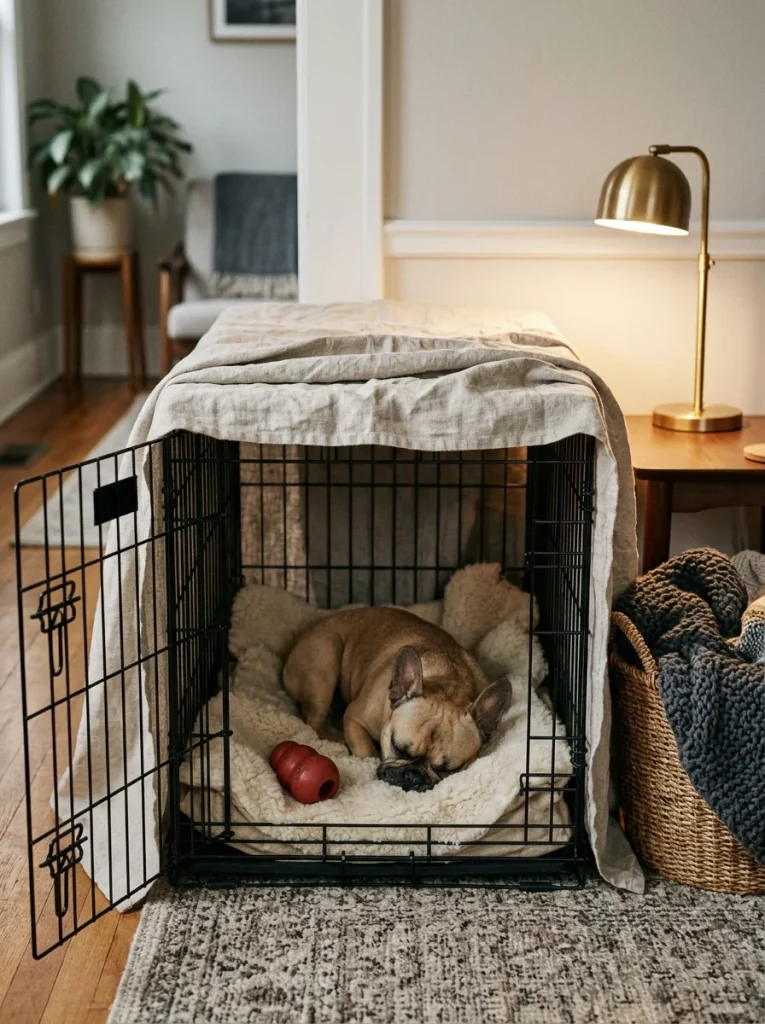
A crate used well becomes a den, not a cell. It speeds up house training and gives your dog a quiet retreat. Keep the door open at first and make it the best room in the house.
Gear note: Choose a crate just big enough to stand and turn around in, about 30 inches for medium dogs ($45 to $60). Feed meals inside for 3 days with the door open. The common mistake is closing the door too long too soon; build up from 30 seconds.
Color note: Oatmeal and soft gray covers dim the light and keep the crate looking like furniture.
Reward swap: Tuck a stuffed chew toy in the crate only at crate time, about $8. It suits puppies and anxious dogs.
Shop The Look
- 30-inch folding wire dog crate
- Breathable linen crate cover
- Washable sheepskin crate pad
- Crate divider panel for growing puppies
- Calming heartbeat plush toy
5. Four Paws on the Floor: Ending Jumping at the Door

Dogs jump because it gets attention. Teach that four paws on the floor opens the door to every greeting and treat. Ignore the jump, reward the sit, and the habit fades within a week or two.
Gear note: Keep a jar of 30 treats by the entrance and practice with 3 family members, each doing 5 greetings. Cost is about $12. Don’t push the dog off, because pushing counts as attention.
Color note: Navy and honey yellow against cream keeps the entry looking calm and welcoming.
Reward swap: Hang a tug toy on the doorknob for a quick greeting game, about $7. It suits energetic young dogs.
💡 Quick Win: Ask guests to turn their backs for any jump.
Shop The Look
- Glass treat jar with airtight lid
- Non-slip woven doormat
- Entryway leash hook rack
- Rope tug toy with handle
- Baby gate for the entryway
6. The $12 Snuffle Mat Enrichment Dog Training Tip
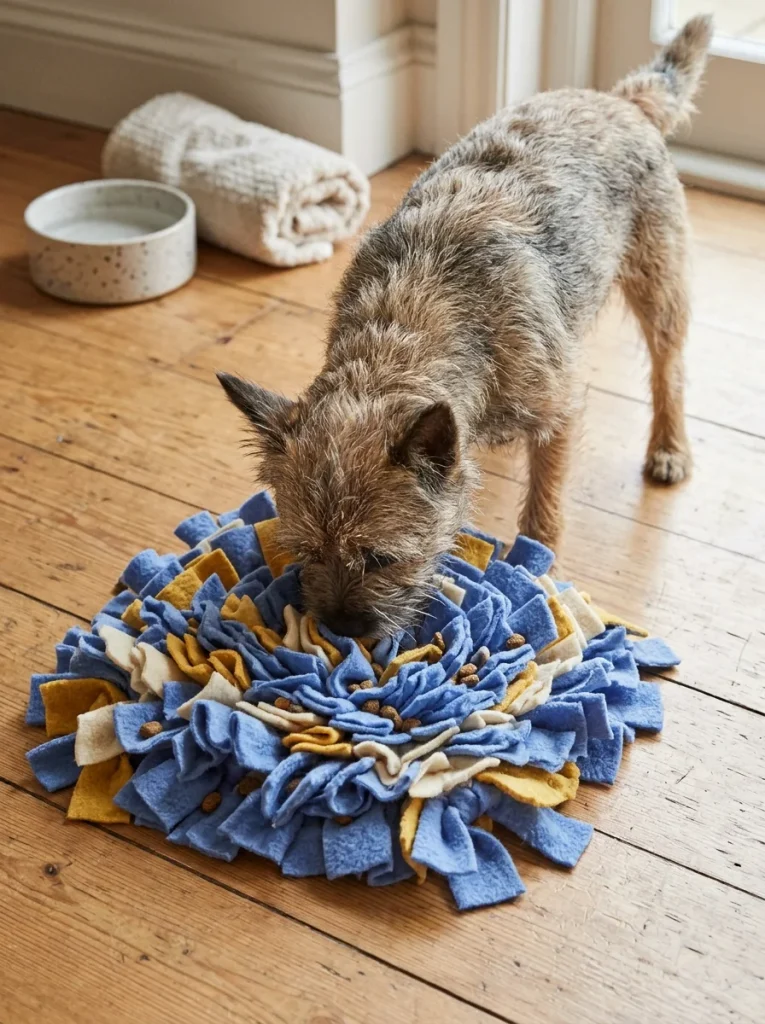
Ten minutes of sniffing tires a dog out as much as a long walk. A snuffle mat turns dinner into a treasure hunt. It’s a gentle outlet for restless energy on rainy days.
Gear note: Scatter ½ cup of kibble into a 16-inch mat with strips tucked in. Cost is about $12, and dinner takes 8 to 10 minutes. Avoid hiding treats too deeply at first, because frustration ends the game.
Color note: Cornflower blue and mustard yellow are easy for dogs to see against a neutral floor.
Reward swap: Add a few pieces of freeze-dried chicken for a high-value dinner, about $3 extra. It suits picky eaters.
Shop The Look
- 16-inch fleece snuffle mat
- Slow-feeder bowl with maze pattern
- Puzzle treat toy, beginner level
- Lick mat with suction cups
- Stainless steel food scoop
7. Touch Training: A Calm Paw and Nail Routine

Cooperative handling turns vet visits and nail trims from battles into routine. Touch a paw, click, treat, and repeat. Within a few weeks your dog offers the paw.
Gear note: Practice 2 minutes a day, touching one paw for 1 second and then building to 5 seconds. A grinder costs about $20. The usual mistake is jumping straight to clipping before the dog accepts touch.
Color note: Slate gray and soft peach feel clinical-calm rather than stark.
Reward swap: Use a squeeze tube of liver paste for licking during touches, about $6. It suits wiggly puppies and nervous adults.
💡 Quick Win: Rub peanut-free paste on a mat so licking keeps your dog still.
Shop The Look
- Quiet dog nail grinder
- Non-slip yoga mat for dogs
- Squeeze tube liver paste
- Styptic powder for nails
- Microfiber paw-wipe towel
8. The “Go to Your Place” Mat Cue for Calm Dinners

A mat becomes your dog’s default “off duty” spot. Reward lying down on it, then add duration and distractions. It’s the easiest way to keep dogs out from underfoot at meals.
Gear note: Use a 24-inch non-slip mat and give 1 treat every 10 seconds, extending to 2 minutes over a week. Cost is about $18. Don’t use the mat as punishment, or it loses its power.
Color note: Charcoal and terracotta tones blend with most dining rooms.
Reward swap: Offer a long-lasting chew only on the mat, about $5. It suits dogs who beg at the table.
Shop The Look
- 24-inch non-slip felt pet mat
- Raised cooling dog bed
- Bully stick chews, 6-inch
- Weighted sleeping blanket for dogs
- Treat-dispensing ball
9. The “Leave It” Hand Game for Safer Walks
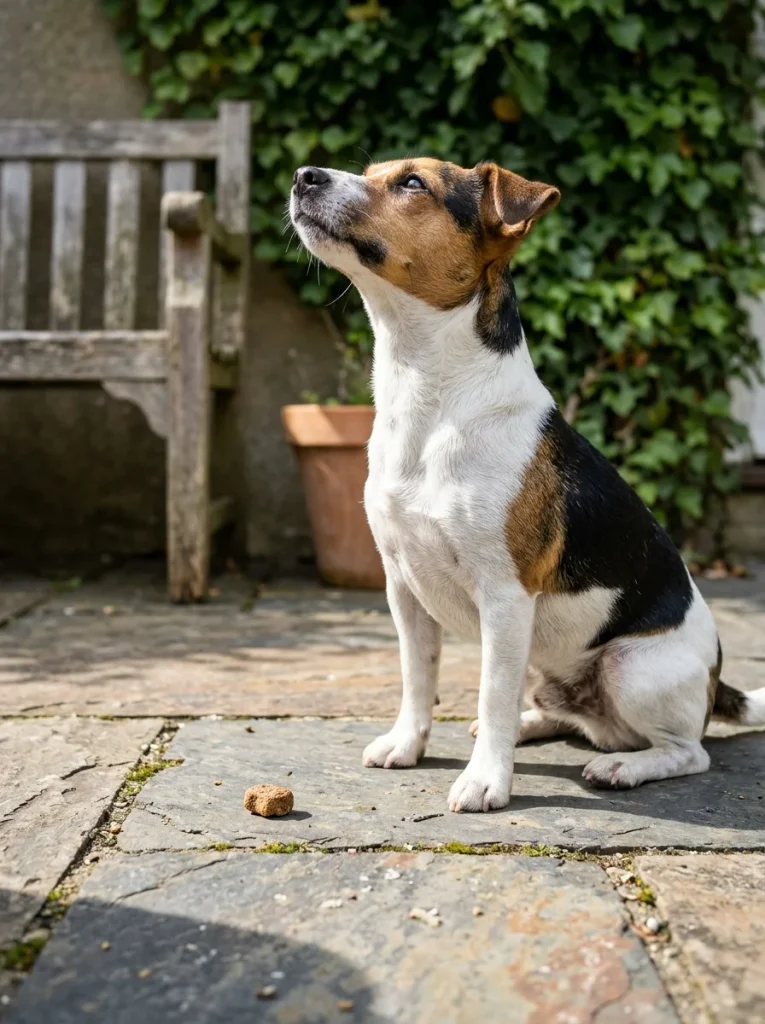
“Leave it” prevents scavenging trouble, from chicken bones to dropped medication. Start with a treat under a closed hand, reward when your dog backs off, and raise the difficulty in steps.
Gear note: Use 2 treat types: a low-value kibble under your hand and a high-value cheese cube as the reward. Cost is about $8. Beginners often say the cue repeatedly instead of waiting silently.
Color note: Slate and terracotta give high contrast so the treat on the ground is visible.
Reward swap: Use tiny cheese cubes, about $4 extra. It suits dogs who rarely take dry treats.
💡 Quick Win: Practice with a closed fist before you place treats on the floor.
Shop The Look
- Soft cheese-flavored training bites
- Treat tin with silicone lid
- Slate-look ceramic bowl
- Bitter apple deterrent spray
- Stainless steel treat spoon
10. Nose-Touch Target: The Easiest Trick That Unlocks Others
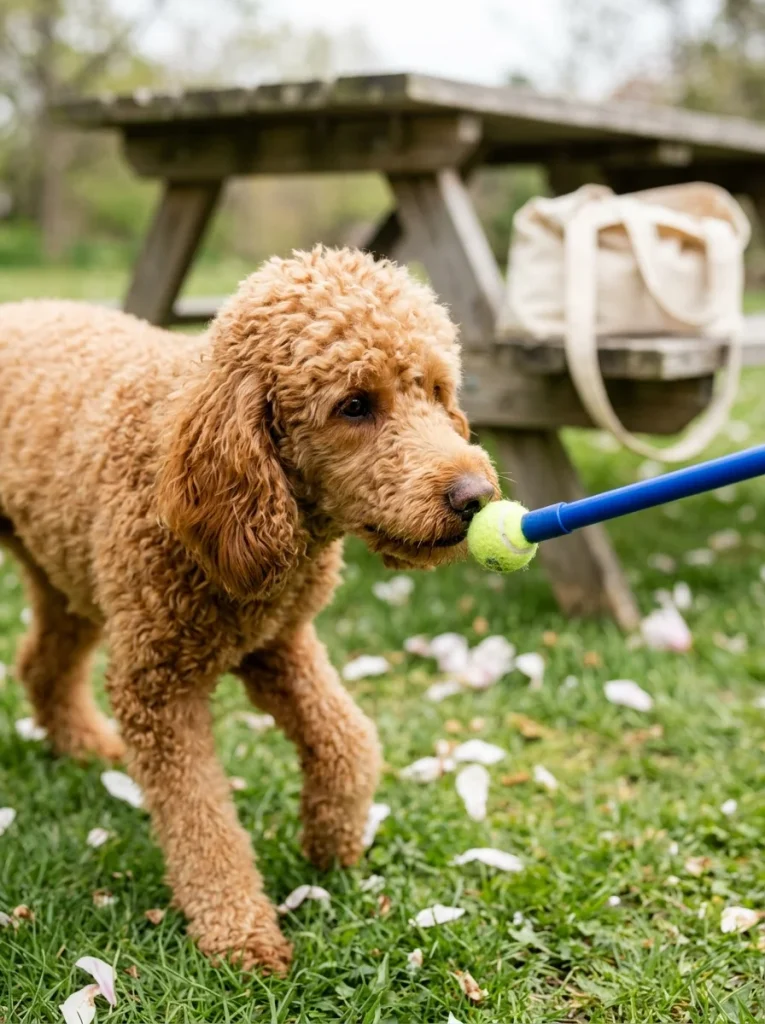
A nose target is a handle for your dog’s attention. Once your dog boops a stick or palm on cue, you can steer them to heel, spin, or climb on a scale. It’s a fun first trick with real practical value.
Gear note: Use a 20-inch telescoping target stick, about $12. Present it, click the nose touch, and reward, 10 repetitions a session. Don’t wave the stick, since movement confuses dogs.
Color note: Royal blue shows up sharply to canine eyes against green grass.
Reward swap: Use a spoonful of plain yogurt on a lick spoon, about $2. It suits dogs who love a lick-treat.
Shop The Look
- Telescoping dog target stick with ball tip
- Dog agility cones set
- Silicone treat lick spoon
- Pet training book for tricks
- Trick-training cue cards
11. The Parking-Lot Pattern Game for Calm Socialization
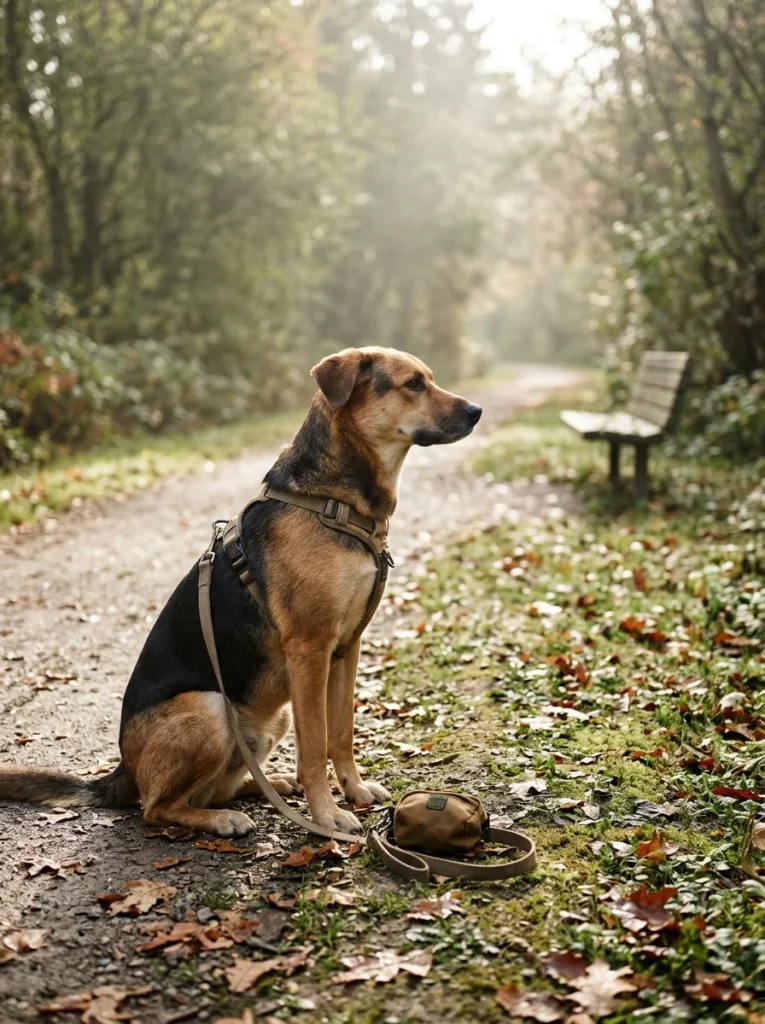
Socialization isn’t about meeting every dog. It’s about showing your dog the world at a comfortable distance and paying for calm. Watch, click, treat, and repeat. The critical window runs from about 3 to 14 weeks, but older dogs learn it too.
Gear note: Practice 25 to 50 feet from any trigger, with 15 treats and a 6-foot leash, for 5 minutes. Cost is minimal. The common mistake is moving too close too fast.
Color note: Moss green and rust gear blend into park settings and keep attention on your dog.
Reward swap: Bring a pack of soft chicken training bites, about $7. It suits shy or reactive dogs.
💡 Quick Win: Turn “look at that” into a game by clicking whenever your dog glances at a trigger.
Shop The Look
- Soft chicken training bites, small
- Clip-on silicone treat pouch
- Yellow “needs space” dog leash sleeve
- Calming pheromone spray
- Dog sniff-walk journal
12. The Frozen Kong That Buys You 30 Quiet Minutes
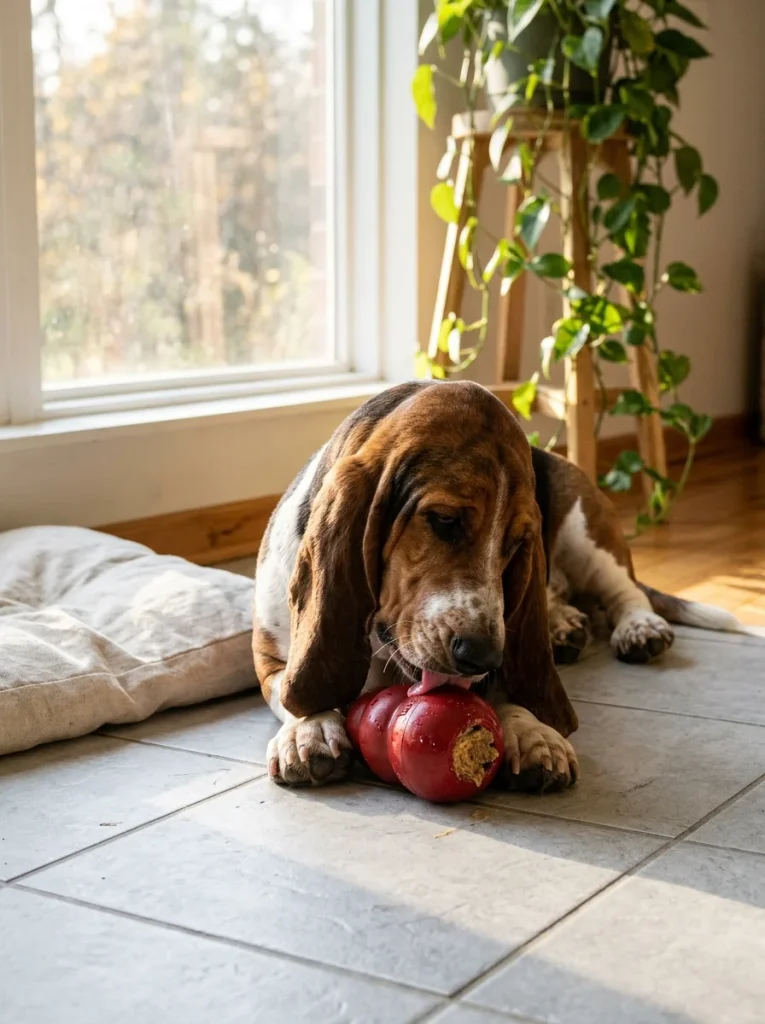
A frozen stuffed toy teaches your dog that alone time is pleasant. It builds calm, extends chewing time, and fills the quiet gaps in your day. Prepare a few ahead of time and keep them in the freezer.
Gear note: Stuff a medium rubber toy with ½ cup wet food and kibble, then freeze 6 hours or overnight. Cost is about $15. Don’t skip the beginner layer: for the first week, stuff loosely so success comes fast.
Color note: Cherry red against cream looks tidy and stands out in a freezer tray.
Reward swap: Layer a spoonful of plain pumpkin puree for a digestive bonus, about $1. It suits sensitive stomachs.
Shop The Look
- Medium rubber stuffable chew toy
- Silicone freezer tray for treats
- Dog-safe pumpkin puree
- Kibble-and-wet-food topper pouches
- Stuffing funnel and tamper tool
13. The “Drop It” Trade That Ends Tug-of-War Standoffs
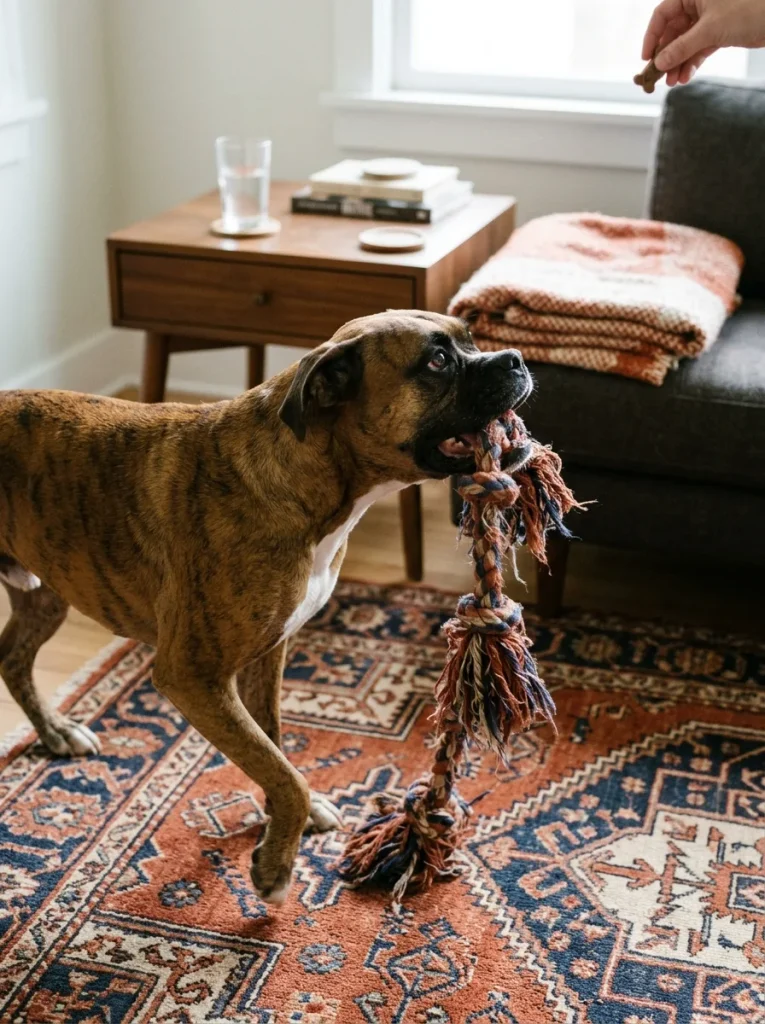
Trade a toy for a treat and your dog learns that letting go makes more good things happen. Never chase or grab, since that turns the object into prized loot.
Gear note: Offer a 10-treat bag and two identical toys. Say “drop,” reward, and then return the toy about half the time. Cost is about $14. The usual mistake is only asking for the toy when play ends.
Color note: Rust orange and indigo toys stand out clearly against a cream rug.
Reward swap: Use a bit of smelly sardine fish treat for high-value trades, about $5. It suits stubborn guarders.
💡 Quick Win: Buy two identical toys so you can swap one for the other.
Shop The Look
- Two-pack of identical rope toys
- Natural fish skin treats
- Durable fetch bumper toy
- Tug toy with flexible handle
- Chew-proof stuffed plush
14. Chin Rest: A Gentle Dog Training Tip for Vet Visits
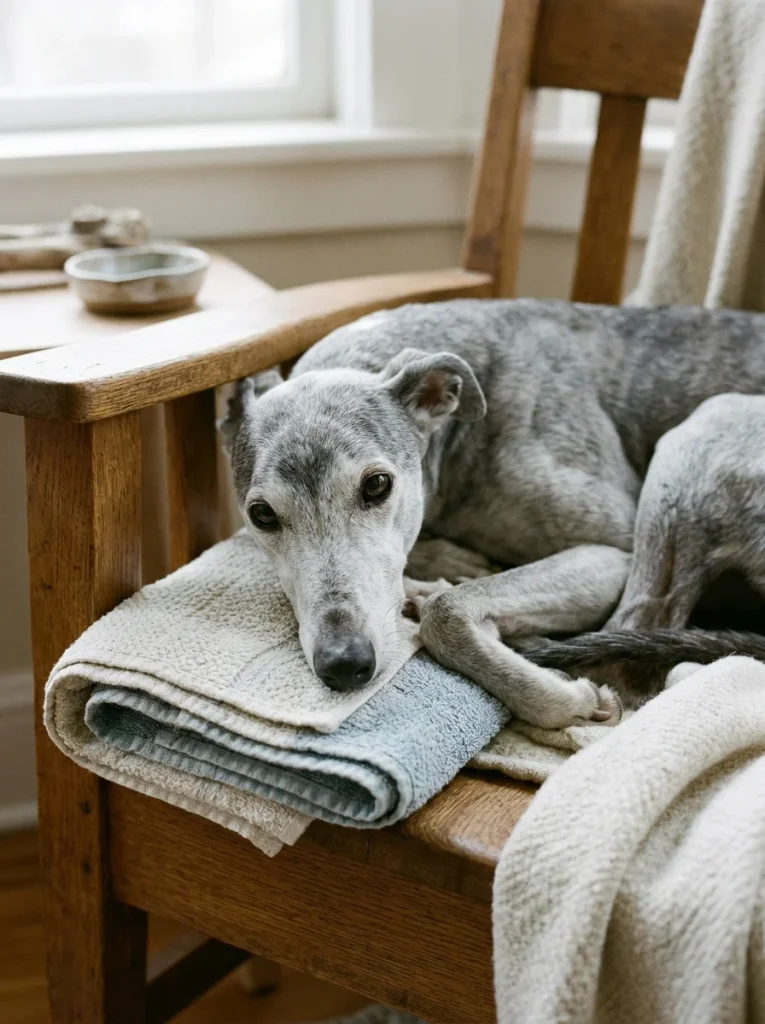
A chin rest lets a vet or groomer look at eyes, ears, and teeth while your dog stays calm. Reward the chin on a surface, then add duration. It’s quiet, useful, and builds trust.
Gear note: Use a folded 12-inch towel and reward each second at first, building to 10 seconds. Cost is about $5. Don’t pull the head down; let your dog choose to rest.
Color note: Dove gray and ivory feel soothing and neutral.
Reward swap: Use a squeeze-tube treat during checks, about $5. It suits fearful dogs.
Shop The Look
- Microfiber pet towel, extra large
- Ear-cleaning wipes for dogs
- Dog toothbrush and enzymatic paste
- Slicker brush for grooming
- Muzzle-training basket muzzle
15. Teach “Spin” in Three Minutes (Zero Cost)
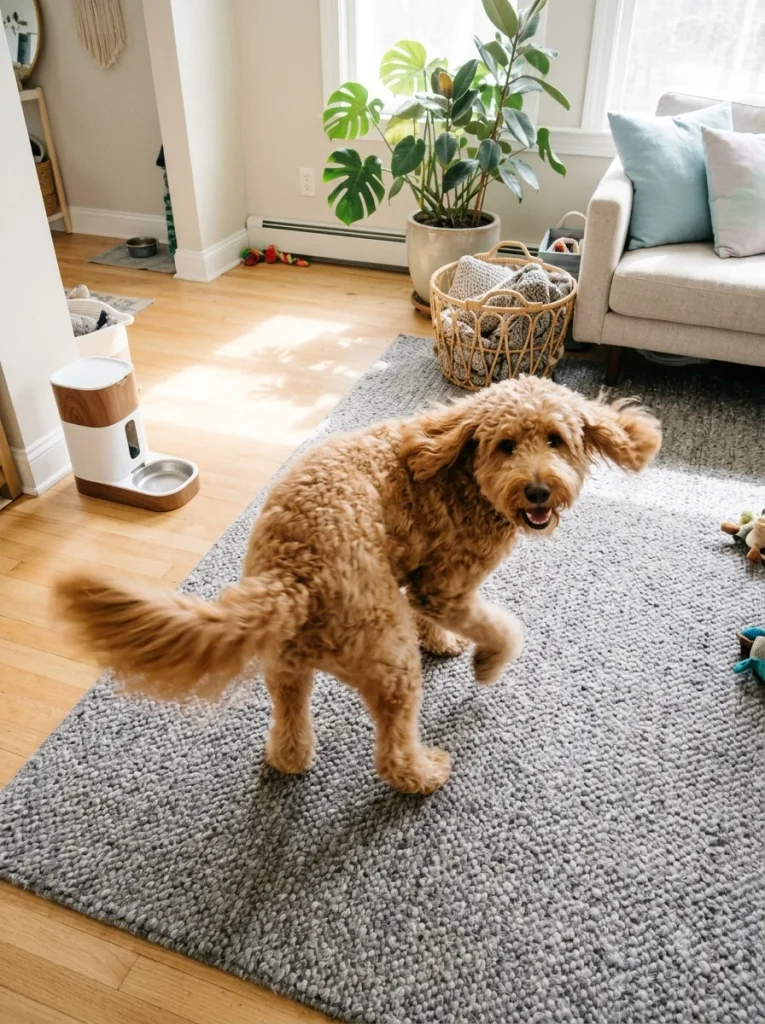
Spin is the trick everyone smiles at. Lure your dog’s nose in a circle, click at the full turn, and add the word later. It ends a training session on a high note.
Gear note: Use 8 pea-sized treats and a 3-minute session on a non-slip floor. Cost is free if you already own treats. Avoid slippery floors, which discourage turning.
Color note: Apricot fur against sky blue and sage keeps the shot light and cheerful.
Reward swap: Finish with a short game of fetch, about $0 extra. It suits high-energy dogs.
💡 Quick Win: Start each spin with a treat at nose level, close to the dog’s face.
Shop The Look
- Non-slip yoga mat for tricks
- Soft training treats, grain-free
- Pastel-colored play ball
- Trick-training prop stool
- Dog birthday bandana for photos
How to Start Your Dog Training Routine
Start with one move: charge your clicker or marker word (Tip 1). Every other lesson builds on that single sound, so ten quiet minutes here pays off for months.
The most common mistake is running sessions too long and rewarding too late. Keep sessions to 3 to 5 minutes and deliver the treat within one or two seconds of the click.
Three items under $50 will carry you far: a two-pack of box clickers (about $6), a 6-foot padded-handle leash (about $14), and a 6-ounce bag of soft training treats (about $9). That’s under $30 total, leaving room for a snuffle mat.
Expect early wins in a weekend: a clicker-charged dog, a reliable sit, and a first spin. Loose-leash walking, solid recall, and calm greetings take several weeks of daily practice, and puppies under six months need especially short sessions. Anything involving fear or aggression deserves a certified trainer, no matter how many tips you try.
Frequently Asked Questions About Dog Training Tips Every Owner Should Try
What is positive reinforcement dog training?
It’s a method that rewards behaviors you want, using treats, toys, or praise, so your dog repeats them. Unlike punishment-based methods, it doesn’t rely on fear or pain, and veterinary behavior groups recommend it. For example, you click and treat the instant your dog sits.
What color dog gear is easiest for dogs to see?
Dogs see blues and yellows best, while reds and greens look muted and brownish. A blue snuffle mat or a yellow clicker stands out clearly. A bright orange long line also shows up well in grass because of its contrast.
How much does dog training cost?
Starting at home can cost under $30 for a clicker, leash, and treats. Group classes often run about $120 to $300 for a six-week course, and private sessions commonly cost $75 to $150 per hour, depending on your area. Home practice between classes is where most of the progress happens.
Are these dog training tips for puppies or adult dogs?
They suit both. Puppies learn fastest between 8 and 16 weeks, but adult and senior dogs learn just as readily with patience and tasty rewards. Shorten sessions for puppies to 2 minutes, and use softer treats for older dogs with sensitive teeth.
How long should I train my dog each day?
Three to five minutes, two or three times a day, works better than one long session. Short bursts keep your dog focused and finish while the dog is still eager. For example, one minute at breakfast and one before the evening walk adds up quickly.
Ready to Put These Dog Training Tips Into Practice?
You now have a full menu, from the first clicker session and snuffle mats to crate dens and chin rests. Starting small is the right approach, because one tip done well beats five rushed ones. Today, charge the clicker: cut 20 pea-sized treats, click, treat, and stop after five minutes. Your dog will soon look at you with that bright, hopeful face that says, “I understand.” Save your favorites from these dog training tips every owner should try, whether it’s the butter-yellow clicker, the blue snuffle mat, or the orange long line, and pin them so they’re waiting for your next session.


2 Comments