16 precious ideas for dog breeds you’ll love at home
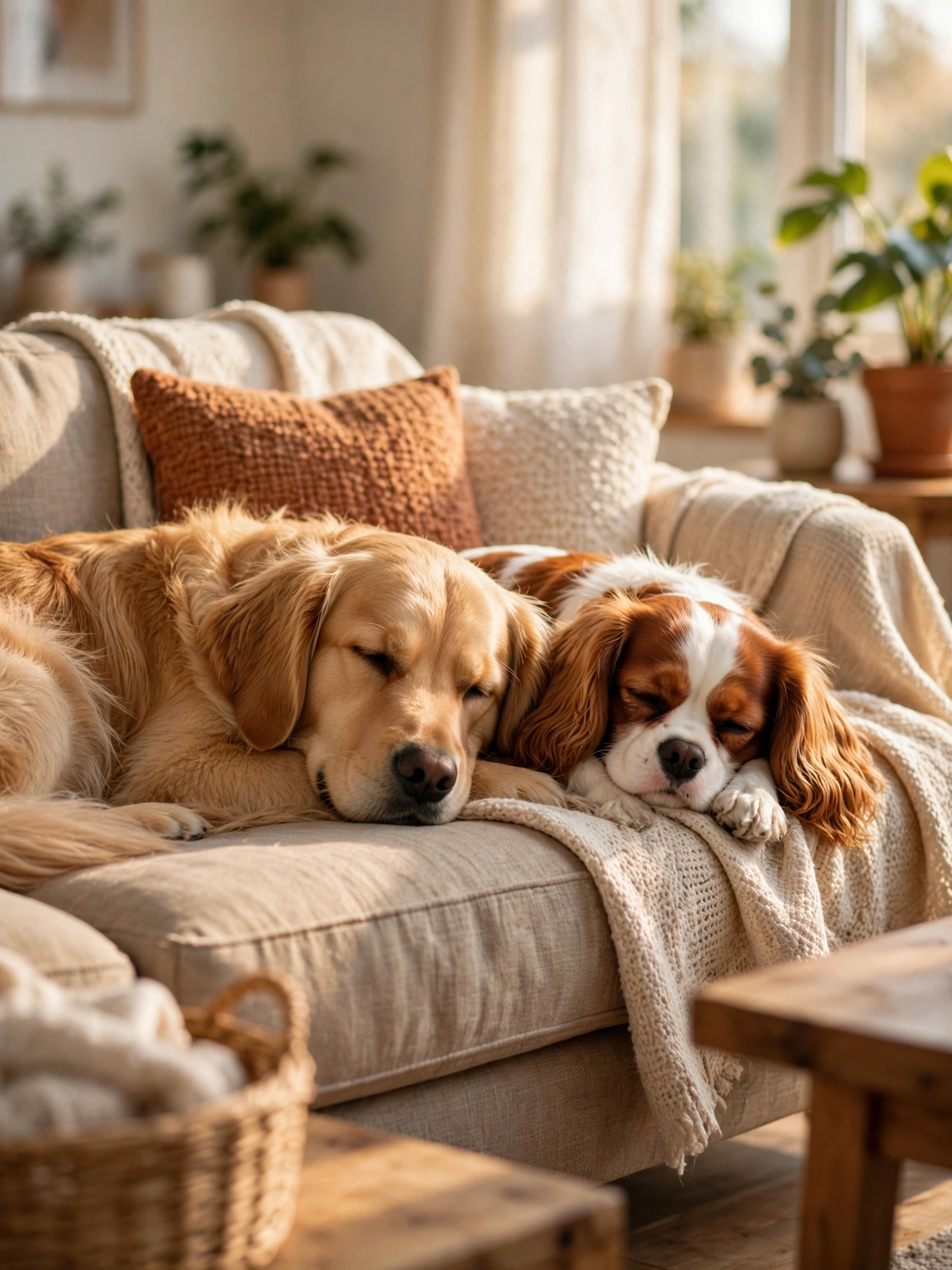
Some dogs are just precious — the kind that curl up on your lap, follow you from room to room, and make the whole house feel softer. 16 precious ideas for dog breeds you’ll love at home gathers sixteen small and gentle breeds that thrive indoors, from the silky Cavalier to the cloud-like Bichon, each with its temperament, care needs, and the kind of home where it is happiest. Picture a sleepy Spaniel on a cream blanket, a Pug snoring softly on a pile of cushions, a tiny Maltese blinking in the sun on a windowsill. The right precious breed does not just fill your home; it fills it with warmth. Here are 16 ideas worth saving — and stealing.
Why 16 precious ideas for dog breeds you’ll love at home Work So Well
Precious dog breeds work because they were bred to be companions first. Unlike working dogs that need a job, these breeds were chosen for one thing: being close to people. They are gentle, affectionate, and happy to spend the day on a sofa, a lap, or a sunny windowsill, and that easy companionship is what makes them so loved at home. A precious breed does not demand much — just your company, a soft bed, and a little patience with its quirks.
The range on this list is the point. A Cavalier is content to sleep the afternoon away on a blanket, while a Pomeranian wants to be the center of every room it enters. A Greyhound is a quiet, lazy giant of the sofa and a French Bulldog is a cheerful clown with bat ears, and both can be right for the right home. Matching the breed to your space, your time, and your tolerance for grooming matters far more than picking the prettiest face.
Honesty comes first with small and gentle breeds. Many of them need regular grooming, some have health issues tied to their size or shape, and all of them need training and socialization — small does not mean low-maintenance. A precious dog that is never trained can become nervous, snappy, or destructive, so gentle, consistent guidance matters just as much as it does for a large breed. And a breed that fits your life today should still fit it in ten or fifteen years, because these dogs live a long time.
Before you fall for a face, check the practical side too. Some breeds shed heavily, some need daily brushing, and some need a professional groomer every few weeks. Think about allergies, your budget for grooming, and how much time you can honestly give. This list of precious dog breeds gives you sixteen honest starting points, so you can pick the companion that fits your home.
| Element | Look A | Look B |
|---|---|---|
| Philosophy | Quiet companionship — a dog that sleeps beside you and asks for little | Cheerful charm — a dog that entertains the whole room |
| Materials | Soft blankets, a cozy bed, and a brush for daily grooming | Squeaky toys, a treat pouch, and a sunny windowsill |
| Color palette | Creams, golds, and soft whites that feel warm and calm | Rich chestnuts, fawns, and bold blacks that catch the eye |
1. Cavalier King Charles Spaniel — The Silky Lap Dog Everyone Loves
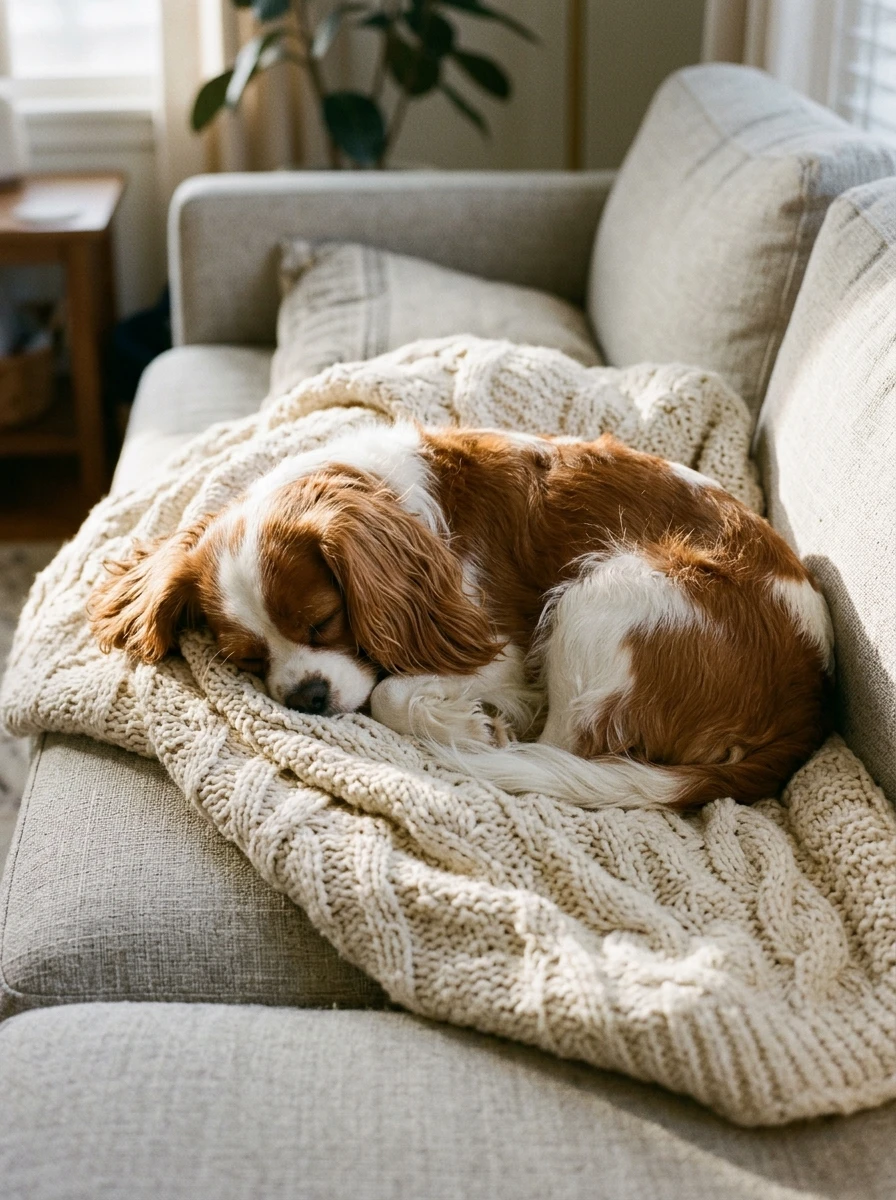
Vibe: Soft, sleepy affection — a dog that melts onto your lap.
Why it works: The Cavalier is the classic precious breed: silky, gentle, and endlessly affectionate, with a calm nature that makes it perfect for a quiet home. Cavaliers adore children, adapt to apartments and houses alike, and are happy to spend the afternoon curled on a blanket. For a family that wants a small, cuddly companion, the Cavalier is hard to beat.
How to get it: Choose a breeder who screens for heart disease (mitral valve disease) and syringomyelia; puppies cost $1,500–$2,500. Cavaliers need only about 45 minutes of daily exercise and regular brushing to keep the silky coat free of tangles. They do not like being left alone for long, so they suit homes where someone is usually around.
💡 Quick Win: Brush your Cavalier for five minutes every evening — it keeps the coat tangle-free and becomes a calm ritual for the whole family.
Shop The Look
Product Search
- Self-cleaning slicker brush, small
- Calming weighted dog blanket
- Orthopedic dog bed, medium, with bolster
- White noise machine for pets
- Ceramic water bowl, 32-ounce
Also view: 14 Inspiring Dog Clothes Design Ideas Your Pup Will Love
2. Golden Retriever — The Gentle Golden Heart
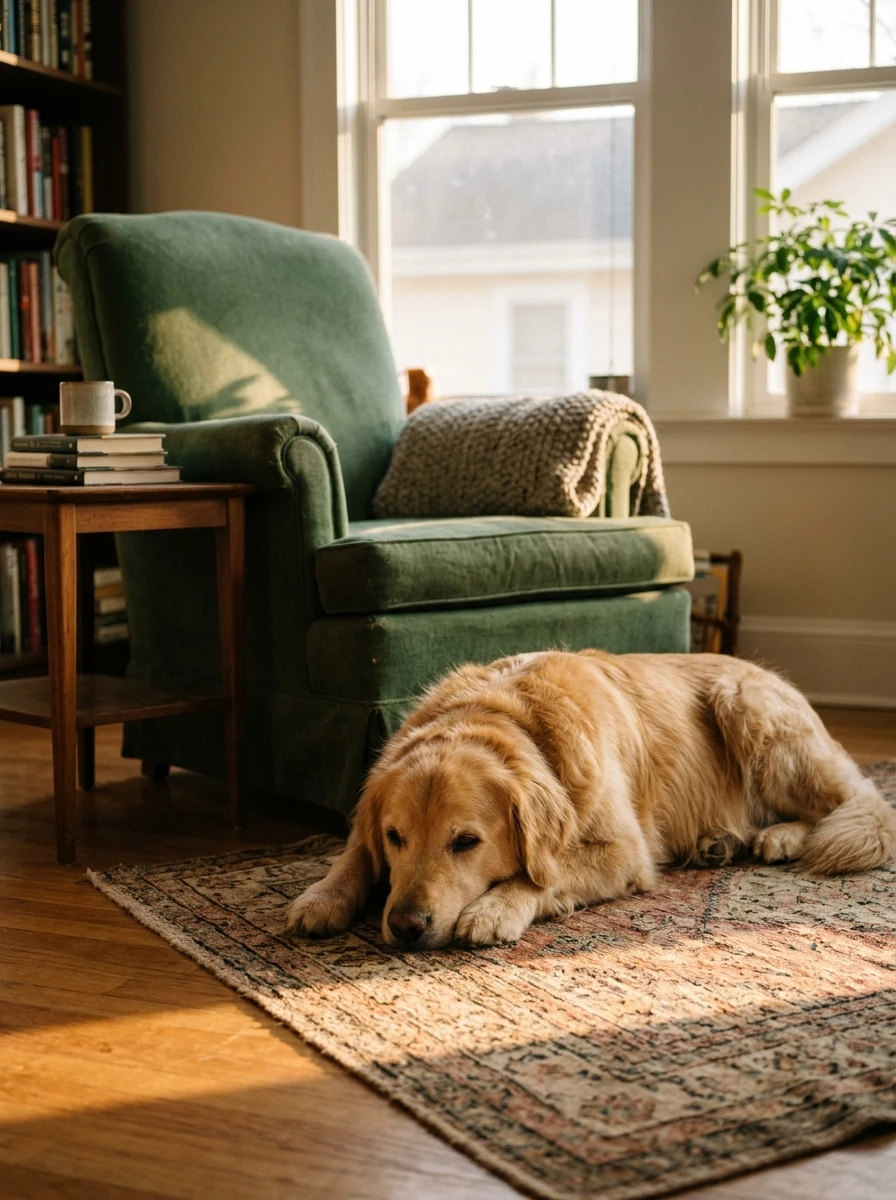
Vibe: Gentle warmth — a dog that seems to smile at the whole family.
Why it works: The Golden Retriever is gentle, patient, and deeply devoted to its people, with a soft mouth and a softer temperament. Goldens are famously good with children of every age, and they bring a calm, sunny presence to a busy home. They are also easy to train, which makes them a great first dog for a family that is new to dog ownership.
How to get it: Choose a breeder who screens for hip dysplasia, elbow dysplasia, and eye conditions; puppies cost $1,000–$2,500. Goldens need about 90 minutes of daily exercise and regular brushing — two or three times a week — to keep the coat from matting. They shed heavily in spring and fall, so a good vacuum earns its keep.
Shop The Look
Product Search
- Slicker brush for long coats, large
- Deshedding shampoo with oatmeal
- Interactive treat puzzle feeder, level 2
- Floating water retrieval toy
- Plush bolster dog bed, washable cover
3. French Bulldog — The Cheerful Clown With Bat Ears
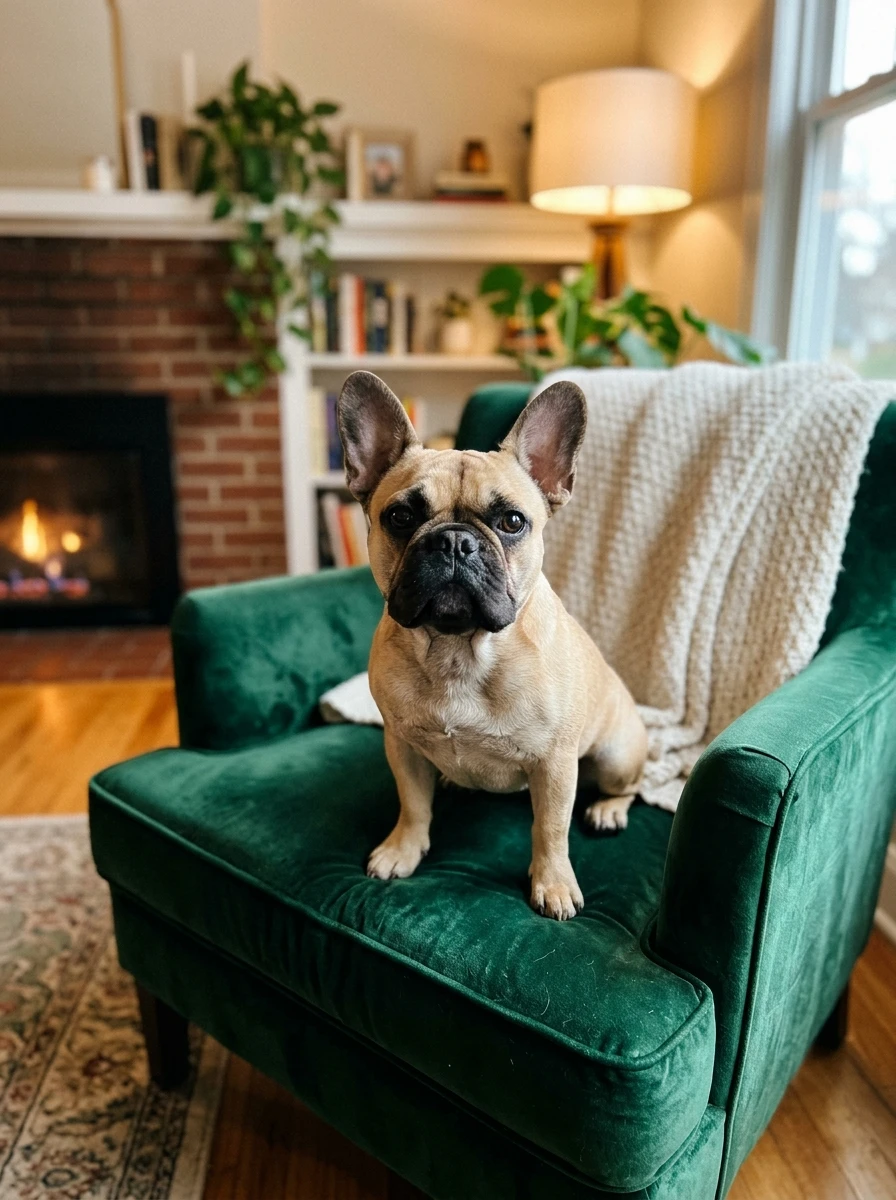
Vibe: Cheerful and clownish — a small dog with a big personality.
Why it works: The French Bulldog is a cheerful, affectionate companion with bat ears, a wrinkled face, and a sense of humor that keeps the whole house laughing. Frenchies are adaptable, good with children, and happy in apartments, needing only short walks and plenty of lap time. For a family that wants a small dog with a huge personality, the Frenchie is a perfect fit.
How to get it: Find a breeder who screens for breathing issues (brachycephalic syndrome) and spine conditions; puppies cost $1,500–$3,000. Frenchies need only 30 to 45 minutes of daily exercise and do best in cool weather. Clean the facial folds weekly and keep training fun and short.
💡 Quick Win: Clean your Frenchie’s face folds once a week with a damp cloth — two minutes that prevents most skin infections.
Shop The Look
Product Search
- Wrinkle cleaning wipes for dogs, 50-count
- Small dog sweater, fleece, with harness hole
- Slow feeder bowl, stainless steel
- Airtight dog food storage container, 25-pound
- Silicone lick mat with suction cups
4. Labrador Retriever — The Patient All-Rounder
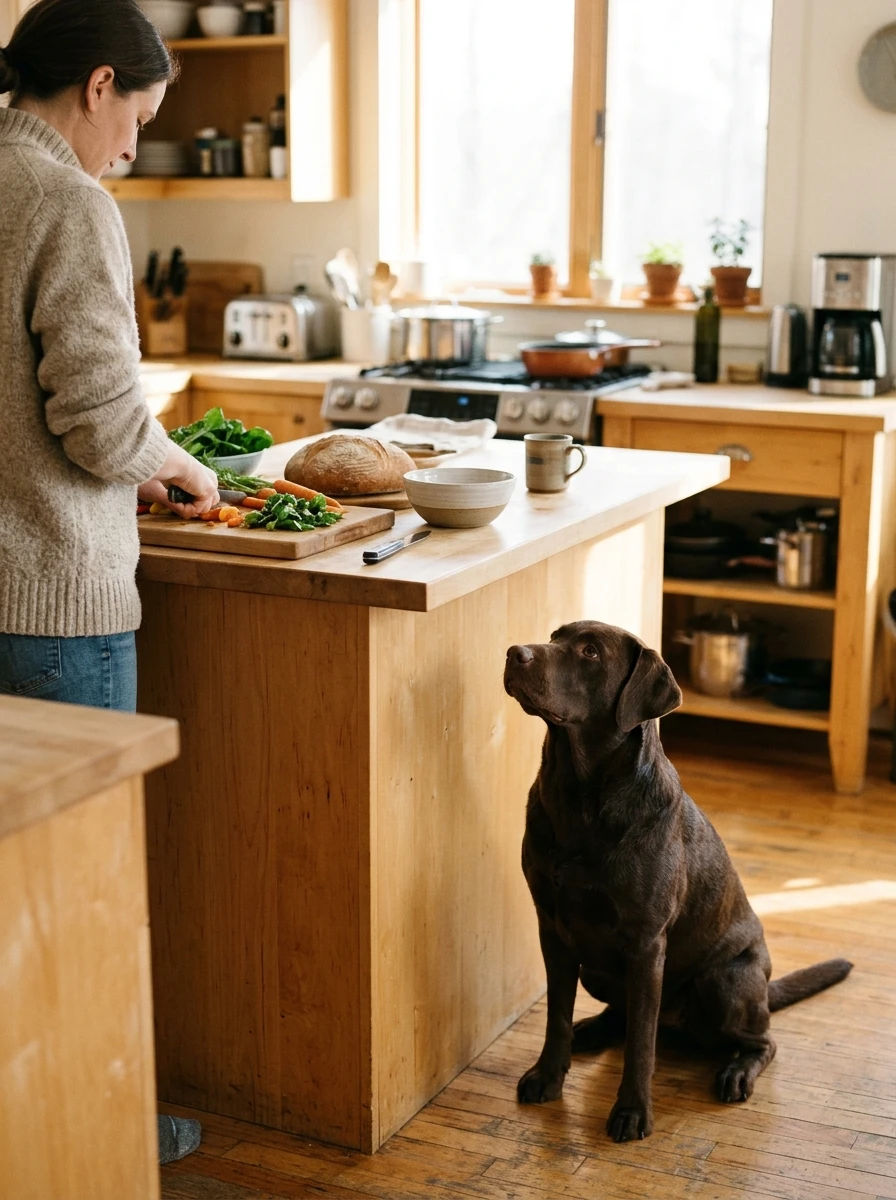
Vibe: Warm, steady patience — a dog that is always glad to see you.
Why it works: The Labrador is the classic family dog because it combines patience, playfulness, and an almost endless tolerance for children. Labs are gentle with toddlers, eager to fetch with older kids, and calm enough to lie quietly during homework time. Few breeds handle the noise and chaos of family life as gracefully as a Lab.
How to get it: Look for a breeder who health-tests for hips, elbows, and eyes, or adopt from a Labrador rescue. Puppies cost $800–$2,000 from a breeder. Plan on 90 minutes of daily exercise — walks, fetch, and swimming if you can — and start training early, because a Lab puppy grows big fast. Labs shed a lot, so a weekly brush is a must.
Shop The Look
Product Search
- Durable rubber fetch toy, large
- Washable dog bed, extra large, with removable cover
- Treat pouch with magnetic closure
- Long-line recall leash, 30-foot
- Freeze-dried liver training treats
5. Pug — The Comical Little Couch Companion
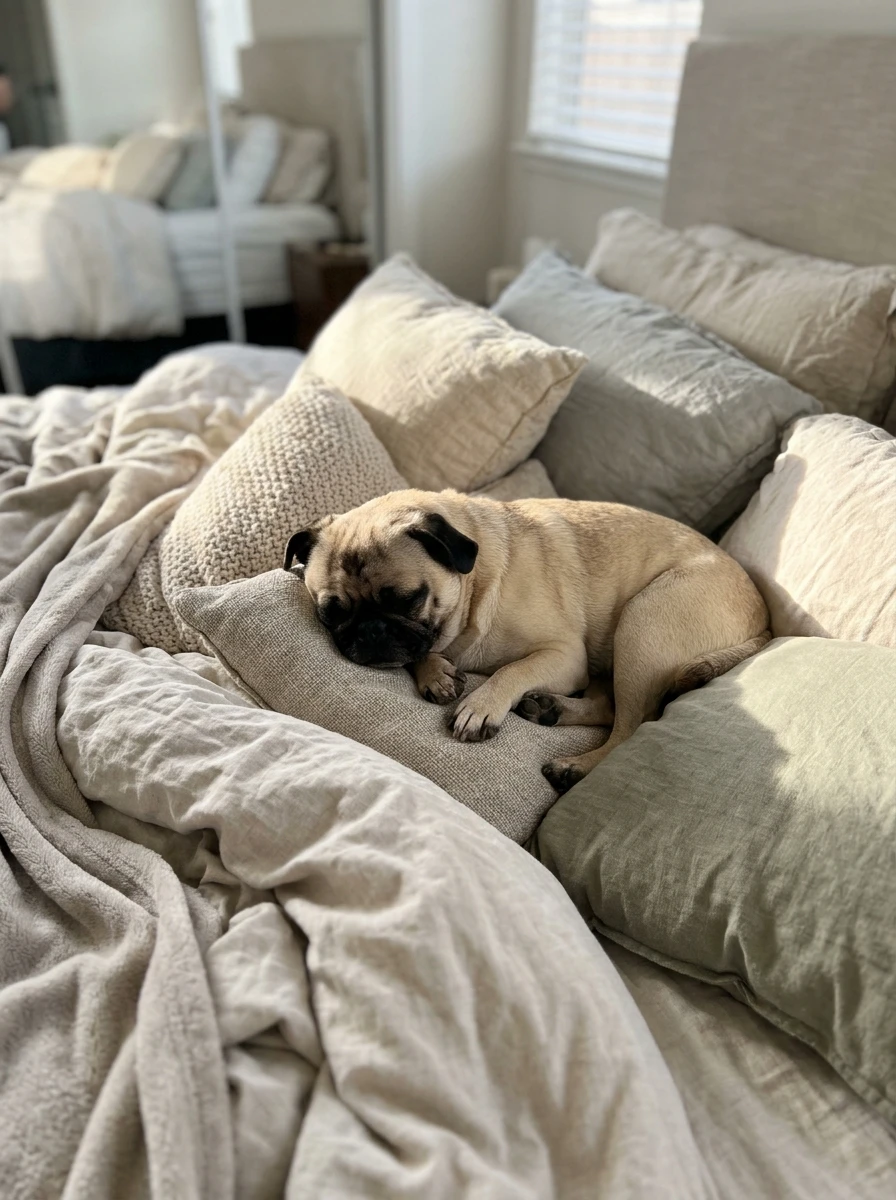
Vibe: Comical and cuddly — a small clown that lives for lap time.
Why it works: The Pug is a comical, affectionate little dog that lives for its family, with a clownish personality that makes children laugh and a calm streak that makes it a perfect couch companion. Pugs are sturdy for their size, good with kids, and happy in small homes. For a family that wants a low-exercise, high-affection dog, the Pug is a wonderful choice.
How to get it: Find a breeder who screens for breathing issues (brachycephalic syndrome) and eye conditions; puppies cost $800–$1,500. Pugs need only about 30 to 45 minutes of daily exercise and do best in cool weather. Clean the facial folds weekly, watch the weight — Pugs gain easily — and keep training fun and short.
💡 Quick Win: Keep a drool towel by the front door and one by the water bowl — two towels save a hundred wipes a day.
Shop The Look
Product Search
- Heavy-duty paper towel holder, wall-mounted
- Microfiber cleaning towels, 24-pack
- Step stool with non-slip top, 2-step
- Spray bottle set, 3-pack, 16-ounce
- Carpet stain brush with stiff bristles
6. Shih Tzu — The Flowing-Coated Little Lion
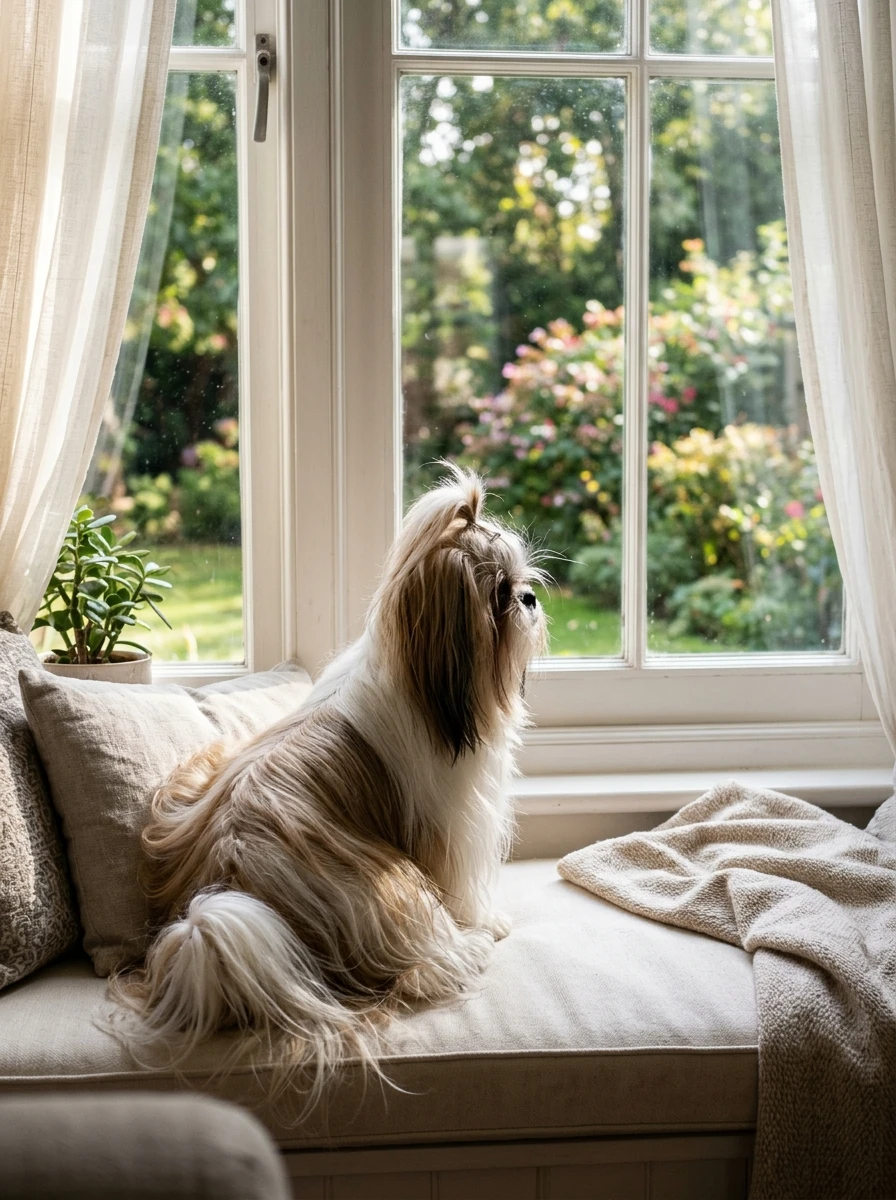
Vibe: Dignified and sweet — a little lion with a flowing coat.
Why it works: The Shih Tzu is a sweet, dignified companion with a long flowing coat and a calm, affectionate nature. Shih Tzus are gentle with children, adaptable to apartments, and happy to spend the day on a window seat watching the world. For a family that wants a small, beautiful dog with a royal air, the Shih Tzu is a lovely choice.
How to get it: Choose a breeder who screens for eye conditions and hip dysplasia; puppies cost $1,000–$2,000. Shih Tzus need daily brushing or a short “puppy cut” to keep the coat manageable, and about 45 minutes of daily exercise. They do not like being left alone for long stretches.
Shop The Look
Product Search
- Stainless steel pin brush for long coats
- Coat conditioning spray for dogs
- Portable paw washer cup, large
- Enzymatic dental chews, 30-count
- High-velocity pet hair dryer
7. Bichon Frise — The Cheerful Little Cloud
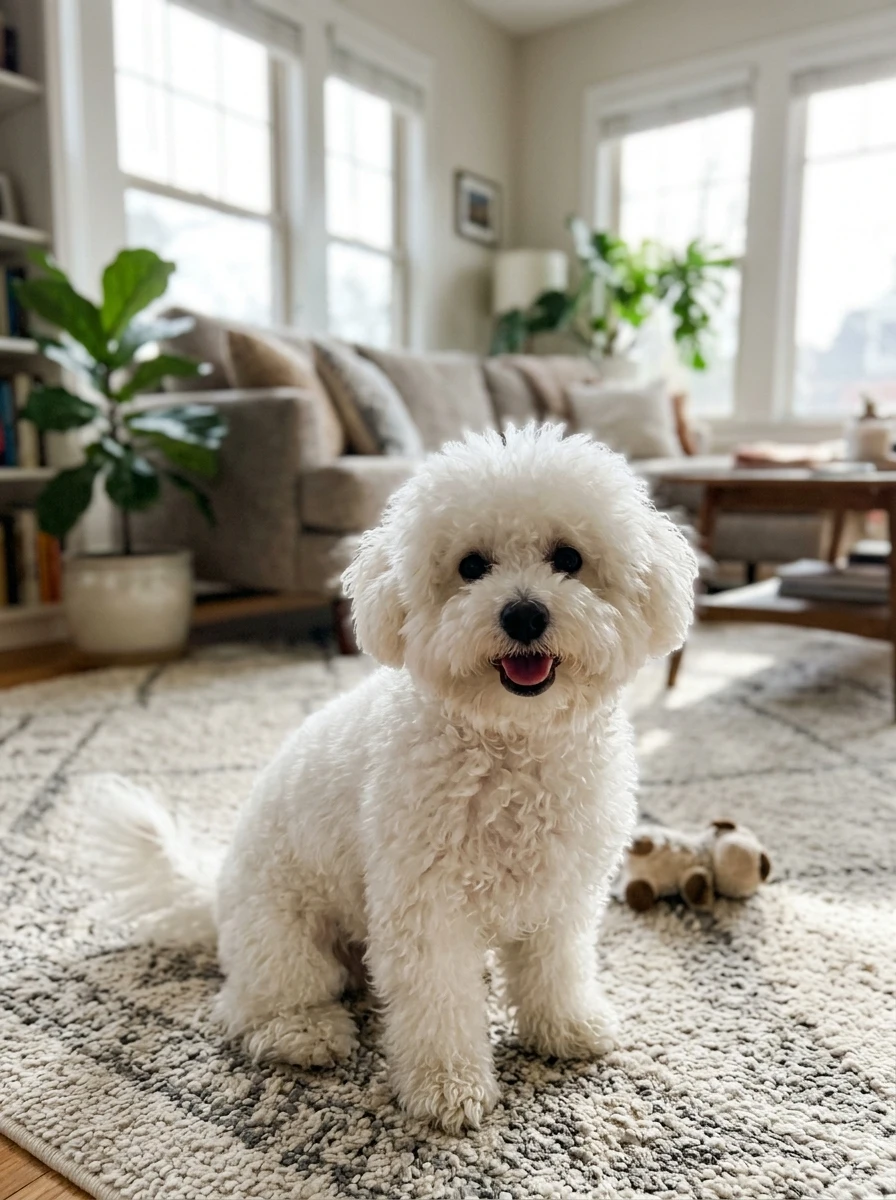
Vibe: Cheerful and portable — a small white cloud that goes everywhere.
Why it works: The Bichon Frise is cheerful, affectionate, and small enough to travel anywhere the family goes, from the car to the holiday cottage. Bichons are gentle with children, hypoallergenic, and famously happy — they seem to smile. For a family that wants a small dog with a big personality and very little shedding, the Bichon is a perfect fit.
How to get it: Choose a breeder who screens for hip dysplasia and eye conditions; puppies cost $1,000–$2,000. Bichons need about 45 minutes of daily exercise and professional grooming every four to six weeks to keep the white coat bright and mat-free. They do not like being left alone for long stretches.
💡 Quick Win: Book the first grooming appointment before your Bichon puppy comes home — a standing slot keeps the coat mat-free from day one.
Shop The Look
Product Search
- Small dog car seat with safety tether
- Whitening shampoo for white coats
- Small dog harness, step-in, with leash
- Plush squeaky toy set, 3-pack
- Dog travel water bottle, 12-ounce
8. Cocker Spaniel — The Happy, Eager Companion
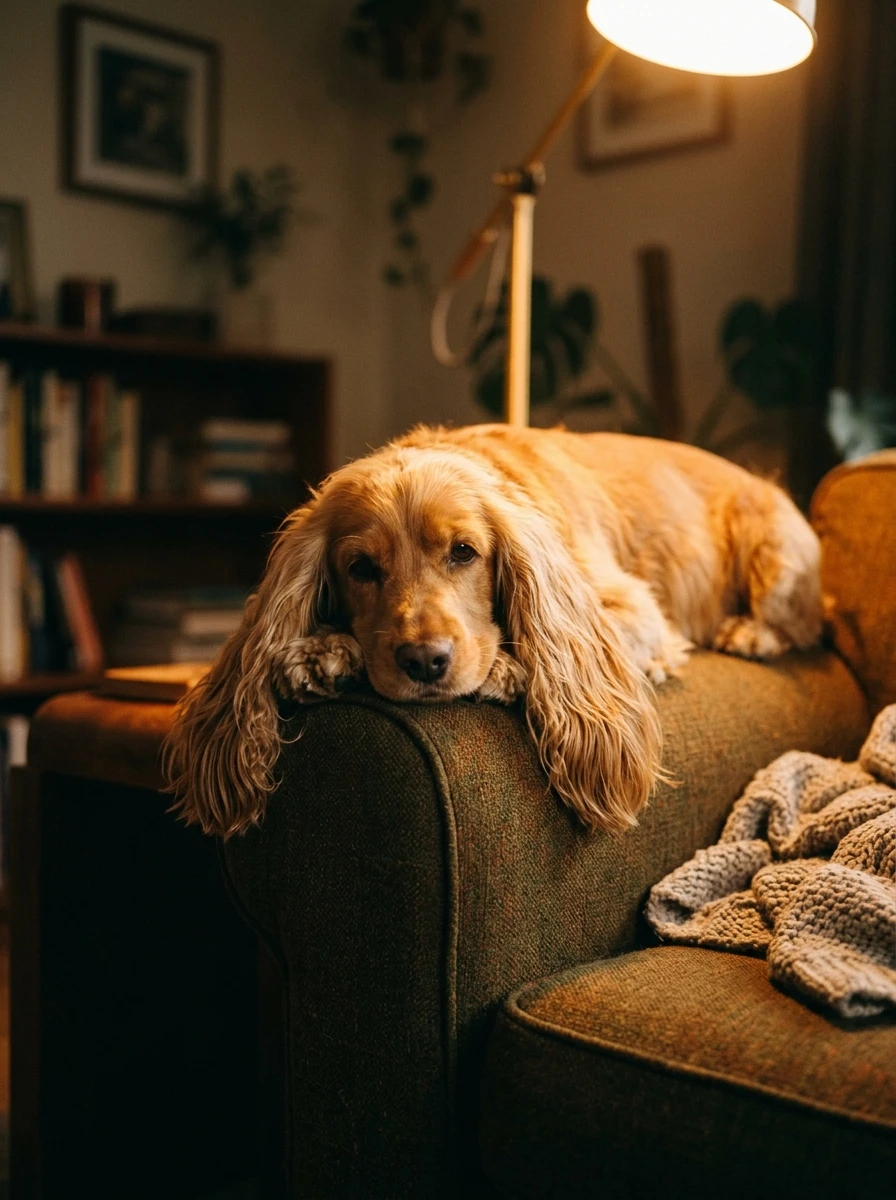
Vibe: Happy and eager — a dog that turns every walk into an adventure.
Why it works: The Cocker Spaniel is happy, gentle, and eager to please, with a wagging tail that seems to run on its own battery. Cockers are good with children, love walks and outdoor play, and adapt well to family life. Their silky ears and soulful eyes make them a favorite with kids, and their moderate size fits most homes.
How to get it: Look for breeders who test for eye conditions and hip dysplasia; puppies cost $800–$1,500. Cockers need about an hour of daily exercise and regular ear cleaning — those long ears trap moisture — plus brushing two or three times a week. Keep training positive and gentle; Cockers are sensitive dogs.
Shop The Look
Product Search
- Ear cleaning solution for dogs
- Silicone grooming gloves, pair
- Reflective dog vest with ID pocket
- LED collar light, rechargeable
- Crash-tested car safety harness
9. Maltese — The Tiny White Jewel of the Windowsill
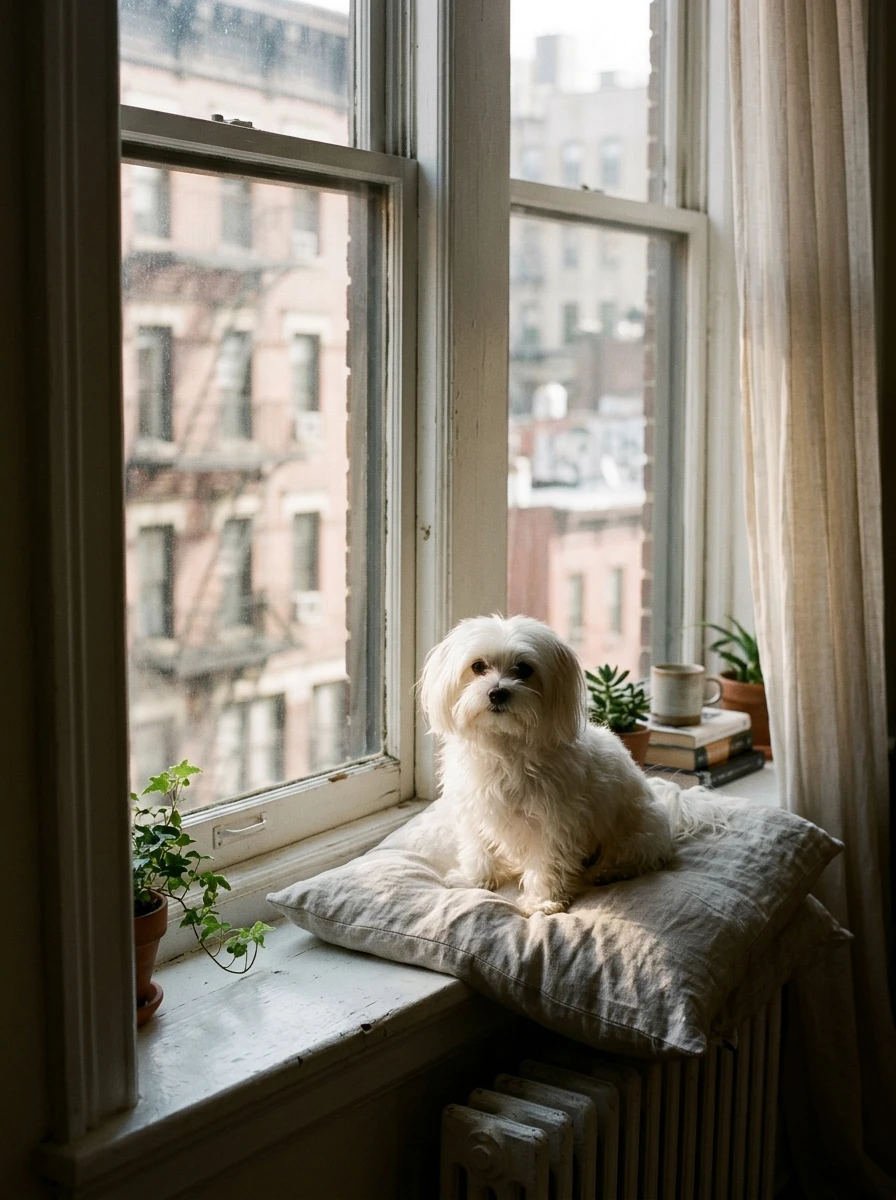
Vibe: Tiny and elegant — a little white jewel that loves the sun.
Why it works: The Maltese is a tiny, elegant companion with a silky white coat and a gentle, affectionate nature. Maltese dogs are happy in apartments, good with older children, and famously devoted to their owners. For a family that wants a very small dog with a big heart, the Maltese is a jewel of a choice.
How to get it: Find a breeder who screens for eye conditions and dental issues; puppies cost $1,000–$2,500. Maltese need daily brushing or a short clip, and about 30 minutes of daily exercise. They are fragile, so they suit families with older children rather than toddlers.
💡 Quick Win: Wipe your Maltese’s eyes daily with a damp cloth — it prevents the tear staining that dulls the white coat.
Shop The Look
Product Search
- Tear stain remover wipes for dogs, 100-count
- Small dog sweater, knitted, with leash hole
- Ceramic water bowl, small, non-slip base
- Pet-safe eye wash solution
- Miniature dog bed with bolster, washable
10. Pomeranian — The Fluffy Little Show-Off
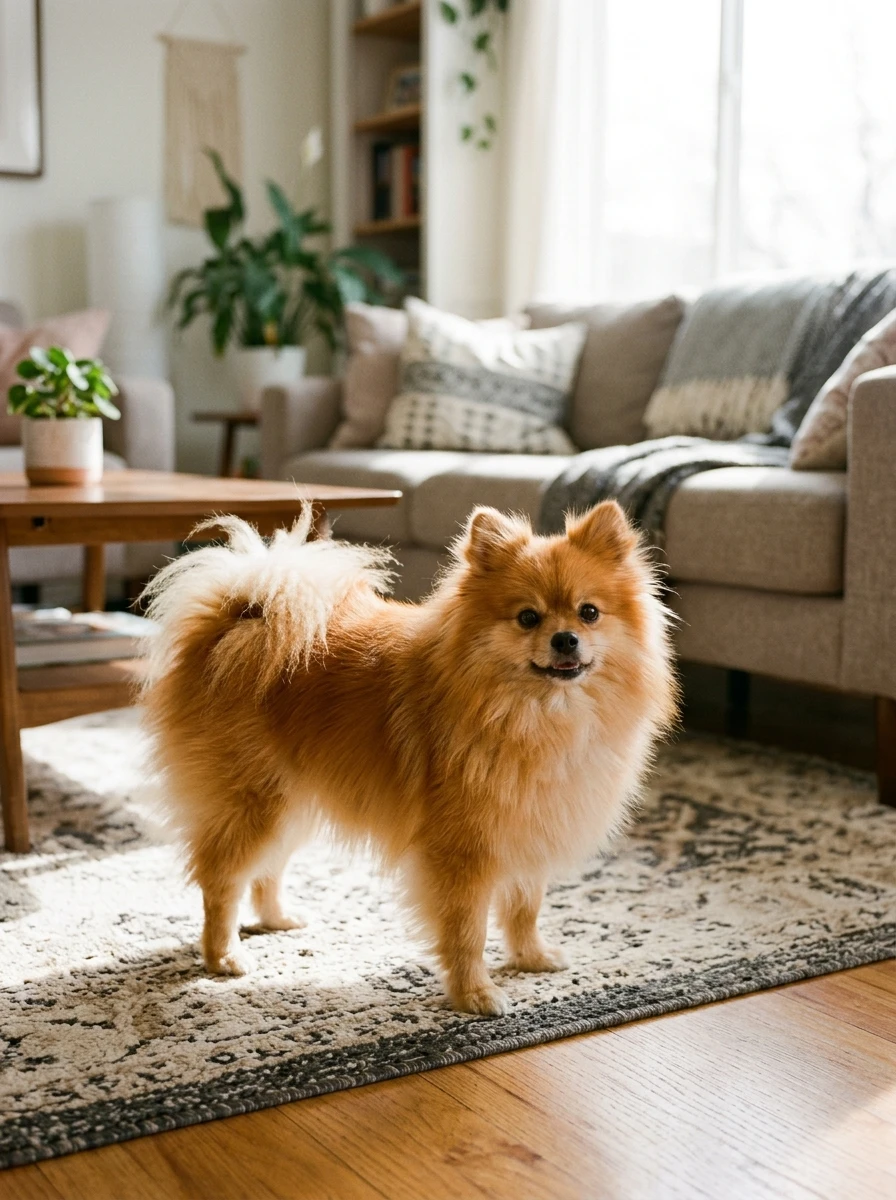
Vibe: Bold and fluffy — a tiny dog with a huge opinion of itself.
Why it works: The Pomeranian is a bold, fluffy little show-off with a big personality packed into a three- to seven-pound body. Pomeranians are lively, intelligent, and deeply loyal, and they love being the center of attention. For a family that wants a small dog with endless charm and energy, the Pomeranian is a delightful choice.
How to get it: Choose a breeder who screens for dental issues, eye conditions, and luxating patella; puppies cost $1,000–$2,500. Pomeranians need about 30 to 45 minutes of daily exercise and regular brushing — two or three times a week — to keep the double coat from matting. Train early, because a Pomeranian that is never trained can become yappy and bossy.
Shop The Look
Product Search
- Deshedding tool for small dogs
- Interactive snuffle ball for dogs
- Treat puzzle feeder, level 1
- Small dog life jacket, with handle
- Dog toothbrush kit with finger brush
11. Havanese — The Wavy-Coated Little Shadow
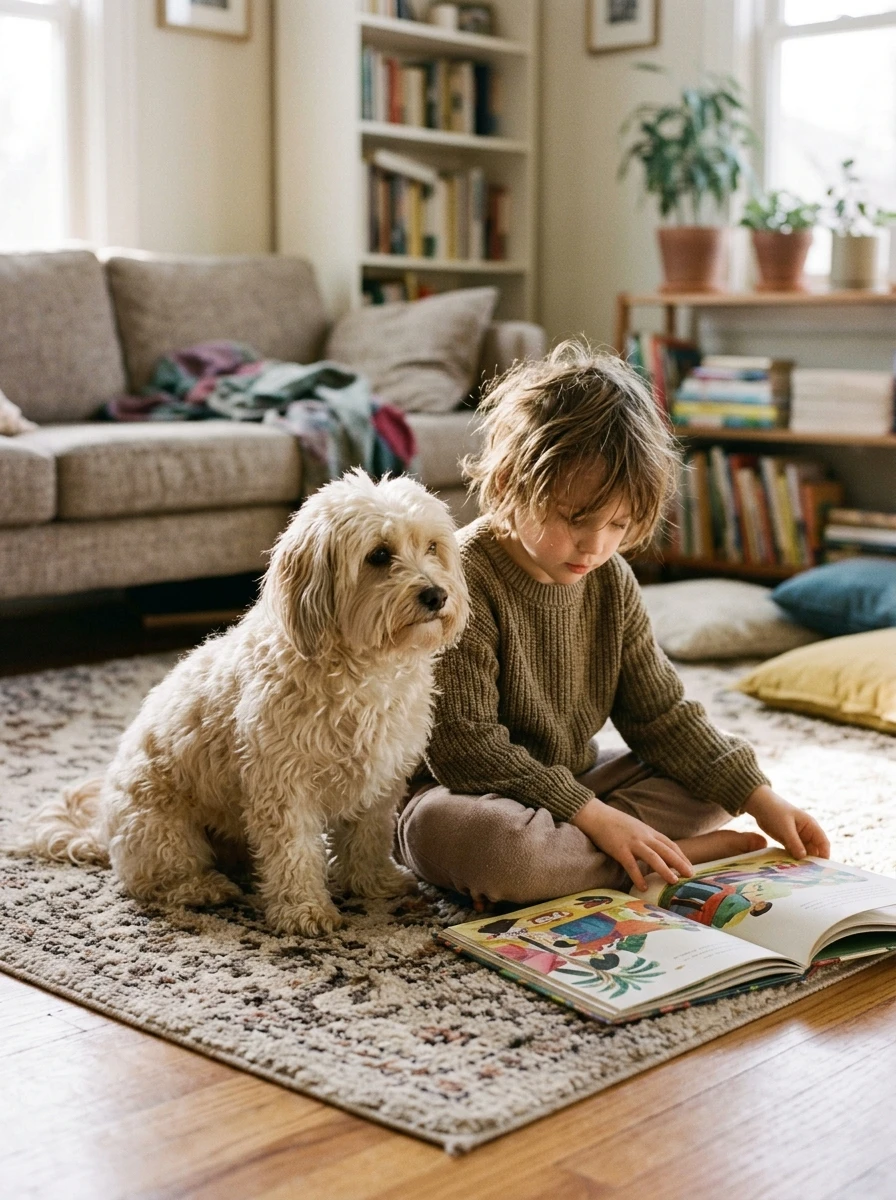
Vibe: Sweet and shadow-like — a dog that follows you everywhere.
Why it works: The Havanese is a sweet, wavy-coated companion that follows its family from room to room, earning the nickname “the little shadow.” Havanese dogs are gentle with children, adaptable to apartments, and famously happy. For a family that wants a small dog that is always nearby, the Havanese is a perfect fit.
How to get it: Look for breeders who test for eye conditions and hip dysplasia; puppies cost $1,000–$2,000. Havanese need about 45 minutes of daily exercise and regular brushing to keep the wavy coat free of tangles. They do not like being left alone for long, so they suit homes where someone is usually around.
💡 Quick Win: Teach your Havanese a “place” cue on a mat — it gives a velcro dog a calm spot to wait while you cook or work.
Shop The Look
Product Search
- Wavy-coat detangling spray for dogs
- Small dog agility set, beginner, 3-piece
- Dog doorbell for potty training
- Treat pouch with clip, for training rewards
- Pet gate with walk-through door, 36-inch
12. Dachshund — The Long Little Charmer in a Sweater
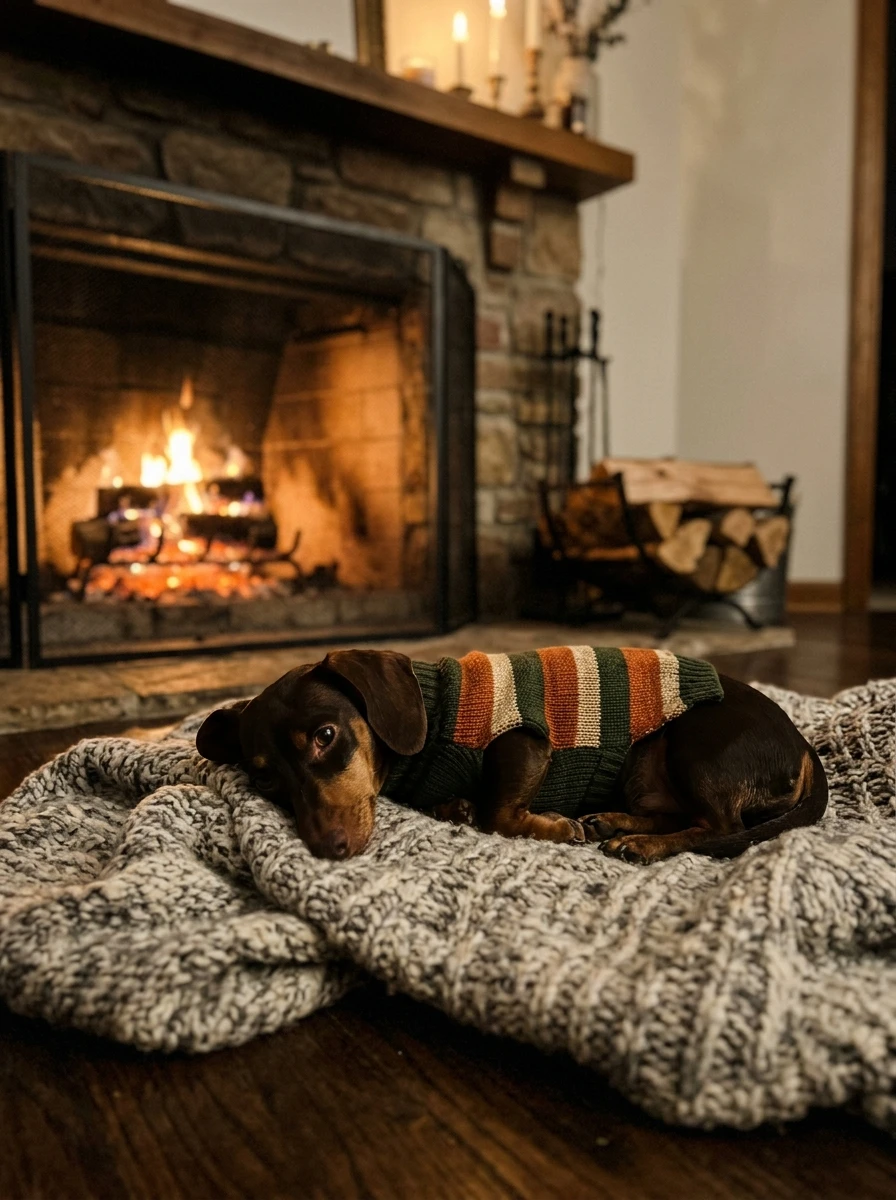
Vibe: Long, low, and charming — a little dog with a big heart.
Why it works: The Dachshund is a long, low charmer with a big heart and a bigger personality, famous for its loyalty and its love of burrowing under blankets. Dachshunds are playful, brave, and devoted to their families, and their small size makes them a good fit for apartments. For a family that wants a small dog with endless character, the Dachshund is a wonderful choice.
How to get it: Find a breeder who screens for intervertebral disc disease (IVDD) and eye conditions; puppies cost $800–$1,500. Dachshunds need about 45 minutes of daily exercise, and they need ramps or steps to protect their long backs — no jumping off sofas. Keep their weight in check, because extra pounds strain the spine.
Shop The Look
Product Search
- Dog ramp for sofa, foldable, non-slip
- Orthopedic dog bed, small, with bolster
- Harness for long-bodied dogs, step-in
- Pet stairs for bed, 3-step, foam
- Joint supplement chews for small dogs, 60-count
13. Beagle — The Merry Little Nose
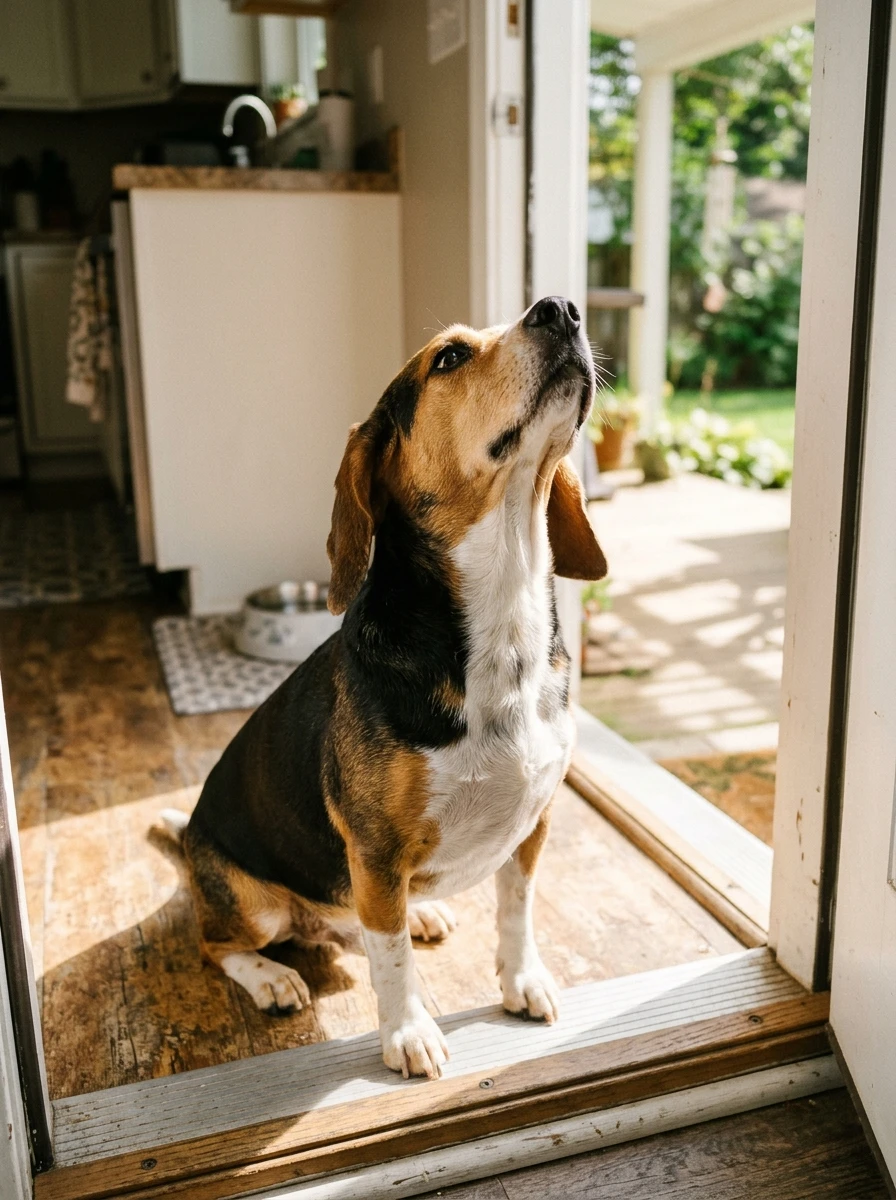
Vibe: Merry and curious — a small dog with a big nose for fun.
Why it works: The Beagle is merry, sturdy, and endlessly curious, which makes it a natural playmate for children. Beagles are small enough to manage in a modest home, tough enough to handle rough play, and social enough to love every member of the family. Their famous nose keeps them entertained for hours on a walk, and their cheerful nature keeps the house lively.
How to get it: Find a breeder who tests for hip dysplasia and eye conditions, or a Beagle rescue; puppies cost $800–$1,500. Beagles need about an hour of daily exercise and a securely fenced yard, because a scent can pull them away fast. Train recall early and keep training sessions short and fun.
💡 Quick Win: Scatter a handful of kibble in the grass for your Beagle to find — five minutes of sniffing tires a Beagle out more than a half-hour walk.
Shop The Look
Product Search
- Snuffle mat for dogs, large
- Reflective rope leash, 6-foot
- GPS pet tracker with live location
- Poop bag dispenser with 300 bags
- Natural paw balm with beeswax
14. Greyhound — The Gentle Couch Potato in Disguise
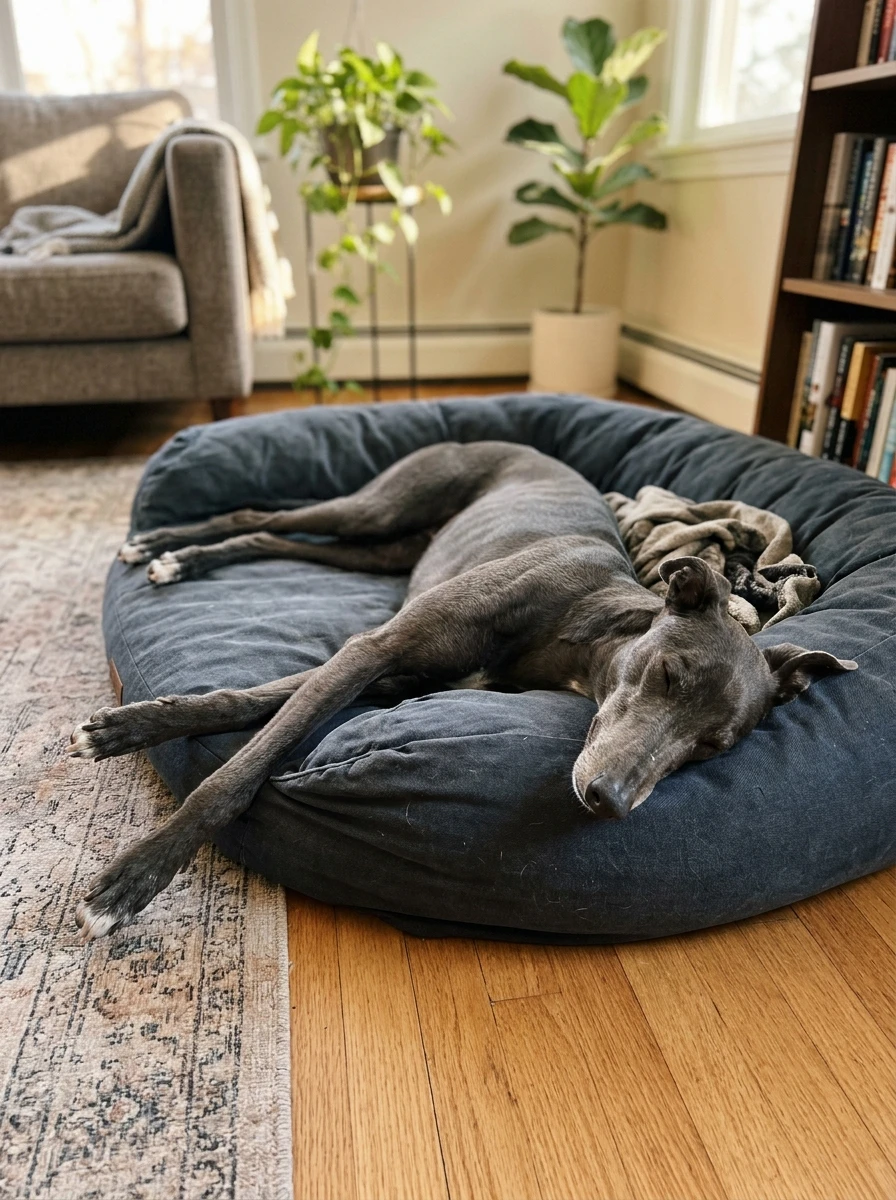
Vibe: Quiet and lazy — a retired racer that lives for the sofa.
Why it works: The Greyhound is a gentle, quiet dog that spends most of the day asleep on the sofa, which surprises everyone who expects a hyper athlete. Greyhounds are calm, affectionate, and good with older children, and they need only two short walks a day. For a family that wants a large dog with a small appetite for exercise, the Greyhound is a perfect fit.
How to get it: Adopt a retired racer through a Greyhound rescue — adoption fees are usually $300–$600 — or find a breeder; puppies cost $1,000–$2,000. Greyhounds need a soft bed, a warm coat in winter, and a securely fenced yard, because they can reach full speed in three strides. They are sensitive dogs, so keep training gentle.
Shop The Look
Product Search
- Extra-large soft dog bed, washable cover
- Dog coat for cold weather, waterproof, large
- Martingale collar for greyhounds, wide, 2-inch
- Raised dog feeder, adjustable height
- Calming pheromone diffuser for dogs
15. Boston Terrier — The Tuxedo-Wearing Little Gentleman
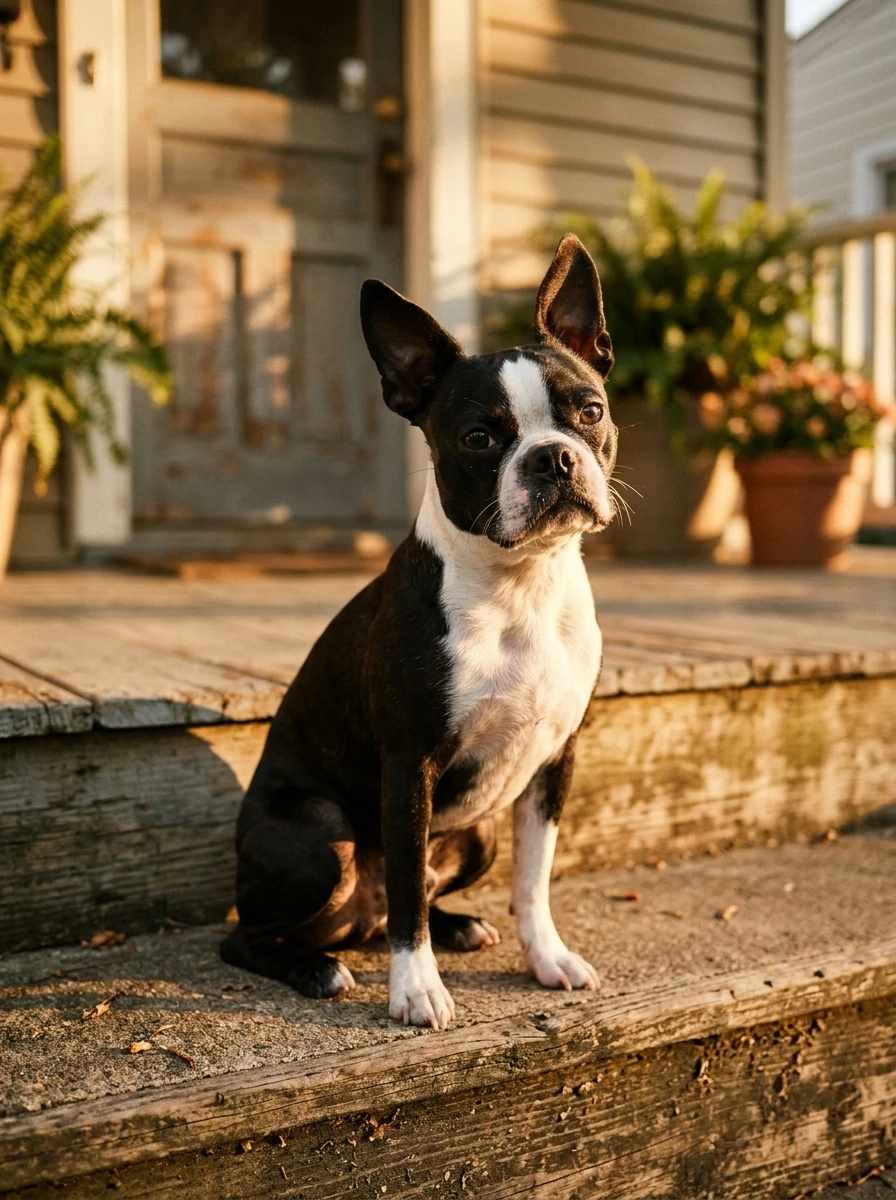
Vibe: Dapper and cheerful — a little gentleman in a tuxedo coat.
Why it works: The Boston Terrier is a dapper, cheerful little dog with a tuxedo coat and a friendly, adaptable nature. Bostons are good with children, happy in apartments, and famously easygoing, with a playful streak that keeps the house lively. For a family that wants a small, smart, low-maintenance companion, the Boston Terrier is a wonderful choice.
How to get it: Find a breeder who screens for eye conditions and breathing issues; puppies cost $800–$1,500. Bostons need about 45 minutes of daily exercise and do best in moderate weather. They are easy to groom — a weekly brush is enough — and they train well with positive, short sessions.
💡 Quick Win: Keep training sessions to five minutes for your Boston — short and fun beats long and boring every time.
Shop The Look
Product Search
- Small dog tuxedo costume, with bow tie
- Interactive treat ball for dogs
- Dog nail clippers with safety guard
- Pet-safe laundry detergent, 100-ounce
- Small dog backpack carrier, ventilated
16. Whippet — The Graceful Little Sprinter
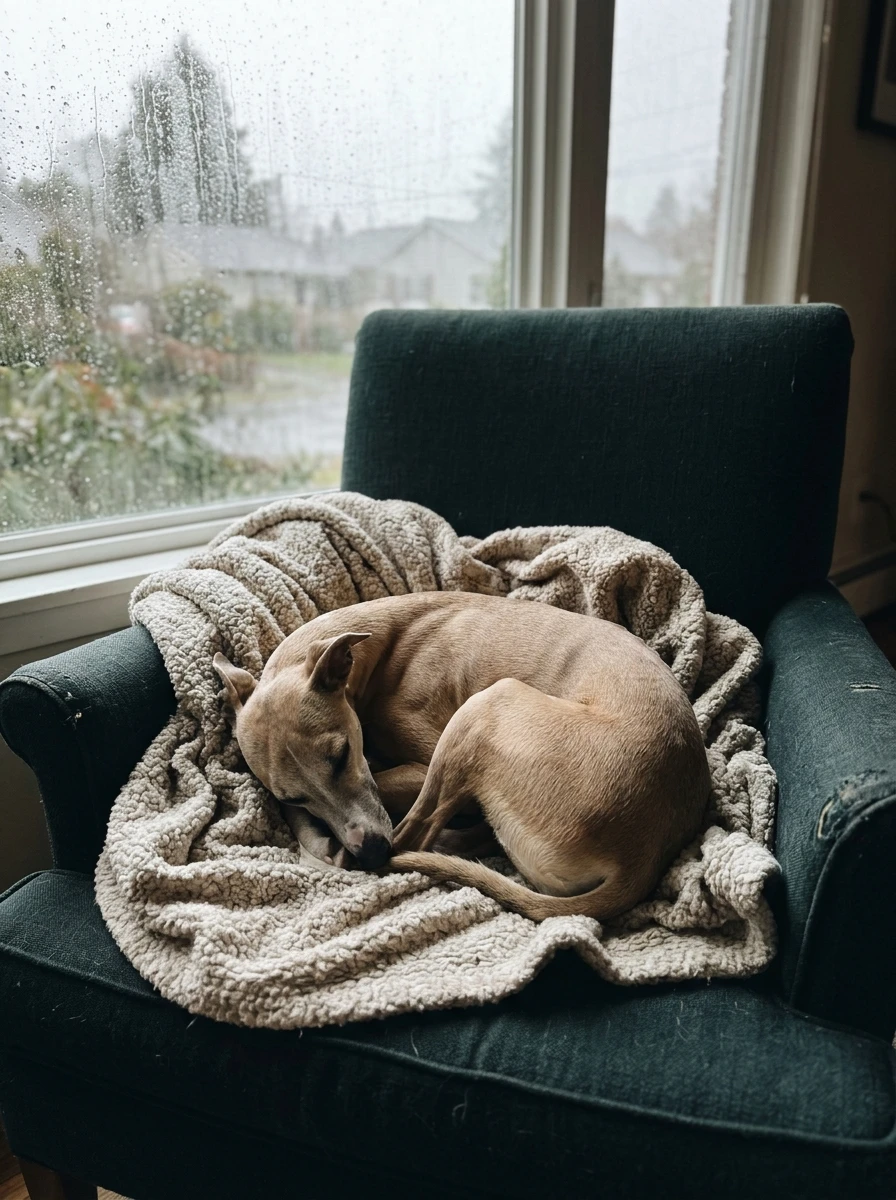
Vibe: Graceful and gentle — a quiet sprinter that curls into a ball.
Why it works: The Whippet is a graceful, gentle dog that sprints like the wind outdoors and curls into a tight ball on the sofa indoors. Whippets are quiet, affectionate, and good with older children, and they need only a short daily run and a warm blanket. For a family that wants a beautiful, low-maintenance dog with a calm heart, the Whippet is a lovely choice.
How to get it: Look for breeders who test for eye conditions and heart disease; puppies cost $800–$1,500. Whippets need a secure area to run — a fenced yard or a dog park — and a warm coat in winter, because their thin coats offer little insulation. They are sensitive dogs, so keep training gentle and positive.
Shop The Look
Product Search
- Dog coat for thin-coated breeds, fleece-lined
- Lure coursing toy for dogs
- Soft fleece dog blanket, washable, large
- Dog sunscreen for thin coats
- Elevated dog bed with bolster, medium
How to Start With Precious Dog Breeds at Home
The first move is not buying a puppy — it is meeting the breed. Spend a week talking to owners, visiting a breed club or a local show, and watching adult dogs of the breed you like in real life. Ask about the hard parts, not just the highlights: the grooming, the health issues, the training hours. Save these 16 precious ideas for dog breeds you’ll love at home as your shortlist, then let real dogs narrow it down for you. A breed that looks right on paper can feel wrong in person, and a breed you overlooked can win you over in five minutes.
The most common mistake is choosing for looks alone and skipping the training that makes a small dog safe. A precious breed that is never trained, or that is carried everywhere and never walked, does not become more precious — it becomes more nervous, and nervousness is what turns a gentle dog into a snapping one. Start training in the first weeks, keep it going through the first year, and give your dog real walks on the ground, not just rides in a bag. A small dog is still a dog, and it deserves the same training as a big one.
You do not need expensive gear to begin. Three budget items under $50 cover the basics: a clip-on treat pouch for around $15, a self-cleaning slicker brush for around $20, and a sturdy puzzle feeder for around $25. Add a notebook to track what your puppy meets each week — new people, new sounds, new places — and you have a training plan that costs less than a takeaway dinner. Spend the money you save on a good trainer instead; one session early is worth ten later.
Expect the first months to be busy and the first year to be a real commitment. Precious breeds need consistent training, daily exercise, and patient grooming, and they reward that work with a loyalty that is hard to describe until you live with it. There will be muddy paws, chewed shoes, and at least one 2 a.m. trip to the garden. Give it a year, and you will have a dog that knows its job, knows its people, and knows the difference between a stranger at the gate and a friend at the door.
FAQs
Are precious dog breeds good with children?
Many precious breeds are gentle and patient with the children in their own family, and breeds like the Cavalier, the Bichon Frise, and the Pug are known for it. Safety still depends on training, socialization, and supervision: teach children to respect the dog’s space, never leave a young child alone with any dog, and choose a breed that fits your household. Small breeds can be fragile, so they suit families with older children better than families with toddlers.
Which precious dog breed sheds the least?
The Poodle, the Bichon Frise, and the Maltese shed the least of the breeds on this list, thanks to their curly or silky, low-shedding coats. The Cavalier and the Pug shed moderately, while the Golden Retriever and the Labrador shed heavily — especially in spring and fall. If allergies are a concern, spend time with the breed before committing, and talk to your doctor about what to expect.
How much exercise does a precious dog need?
Most precious breeds need 30 to 90 minutes of activity a day, split between walks, play, and training. High-energy breeds like the Pomeranian and the Beagle sit at the top of that range, while calmer breeds like the Cavalier and the Greyhound are content with about 30 to 45 minutes. Mental work counts as exercise too: scent games, puzzle feeders, and obedience drills tire a dog out as surely as a run.
Can a precious dog live in an apartment?
Yes — most precious breeds are well suited to apartment life, because they are small, quiet, and happy indoors. Compact breeds like the Maltese, the Pomeranian, and the Havanese thrive in apartments if they get enough daily exercise and mental work. Before you decide, check your building’s pet rules and your local regulations.
What should I check before getting a precious breed?
Check three things before you commit: your local breed rules, your housing or landlord rules, and your home insurance requirements, since some policies ask about specific breeds. Then look at the breeder or rescue carefully — health screening, temperament, and honest answers matter more than a low price. Finally, count the lifetime costs: food, vet care, training, and grooming add up, and a precious dog is a 12- to 16-year commitment.
Your Home, Warmer
From the silky Cavalier to the cloud-like Bichon, from the cheerful Frenchie to the graceful Whippet, these sixteen breeds cover nearly every kind of home and family. Some are calm, some are playful, some are tiny enough to carry and some are big enough to lean on — and the right one for you is the one whose needs match the life you actually live. Start small and start today: call one local trainer or breed club and ask when you can meet an adult dog of the breed you like best. That single conversation will tell you more than a hundred photos. A precious dog does not just live in your house; it changes how your house feels, from the first light in the morning to the last story read at night. Save these 16 precious ideas for dog breeds you’ll love at home, pin the breed that caught your eye — the Cavalier asleep on its cream blanket is a good place to start — and take the first step toward a home that is warmer, day and night.


2 Comments